At first glance, switches and sockets may seem like simple components of a home or workplace. However, in reality, they play a very important role in our daily lives. Imagine walking into a house where the switches are outdated, unsafe, or visually mismatched with the interior design; such a space would certainly not give a pleasant feeling. In contrast, using standard, well-designed switches and sockets not only provides greater safety and comfort but also adds a stylish and cohesive look to the environment.
The correct choice of switches and sockets goes far beyond the basic function of turning lights on and off or connecting appliances. This decision directly impacts home safety, daily convenience, energy savings, and even the visual beauty of interior décor. That’s why many interior designers and professional electricians recommend not just focusing on price or appearance when purchasing switches and sockets, but also considering the mechanism type, build quality, and compatibility with the needs of each space.
In this guide, we will comprehensively introduce the different switch and socket mechanisms available at ZEMGROUP, explain their features and applications, and provide practical advice to help you make the right choice.
Key Criteria for Choosing Switches and Sockets
Before diving into the details of mechanisms, it’s essential to understand the main factors you should consider when buying switches and sockets:
- Safety and Standards
Safety is the number one priority. Choosing products with valid certifications prevents risks such as electric shock, short circuits, or fire. Grounded sockets are particularly important for protecting both people and appliances against current leakage or surges. - Usage and Functional Needs
Each space has different requirements:- Bedrooms often benefit from double-pole switches or dimmers.
- Kitchens require grounded sockets and USB ports.
- Living rooms look more luxurious with toggle or rotary switches.
- Offices need telephone, network, and antenna outlets in addition to power.
- Design and Appearance
Switches and sockets are part of the décor. Minimalist models suit modern homes, while toggle or rotary switches add a classic, elegant touch. - Material and Build Quality
Made from high-quality plastic, metal, glass, or ceramic, the choice of material affects both durability and aesthetics. High-quality materials are a long-term investment. - Interior Harmony
Sometimes, the finish of a switch can make a home look more luxurious or understated. ZEMGROUP offers colorful and customizable frames to match furniture or wall tones. - Special Features and Extra Functions
Today’s switches and sockets often include advanced features such as USB/USB-C chargers, motorized curtain controls, and thermostats—adding modern convenience and saving future upgrade costs.
Main Types of Switch and Socket Mechanisms
- Simple Switches
These are the most common and widely used types, available in single-pole (controls one circuit) and double-pole (controls two circuits independently).
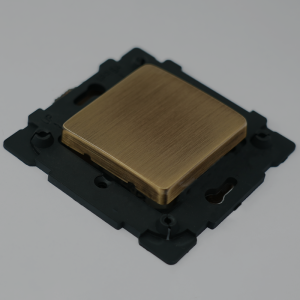
- ONE WAY SWITCH :
-
- Controls one light or device.
- Perfect for small rooms, bathrooms, or storerooms.
- Affordable, durable, and compatible with ZEMGROUP’s decorative frames.
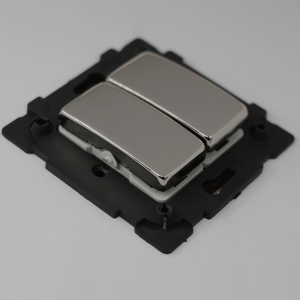
- DOUBLE ONE WAY SWITCH :
-
- Controls two lights or circuits from one unit.
- Ideal for kitchens (ceiling + under-cabinet lights) or living rooms (chandeliers + wall lights).
- Saves space while offering convenience.
- Toggle Switches (Single, Double, Intermediate)
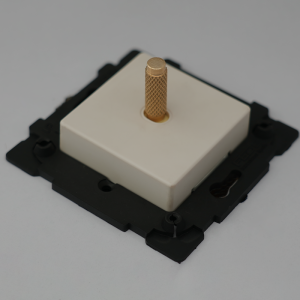
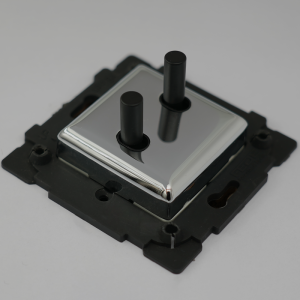
These switches operate by moving a lever up and down. They are practical, durable, and stylish.
- ONE WAY Toggle: For controlling one circuit.
- Double ONE WAY Toggle: For two independent circuits from one spot.
- Intermediate (Two-Way): Lets you control one light from two or more locations—ideal for staircases or hallways.
- Rotary Switches
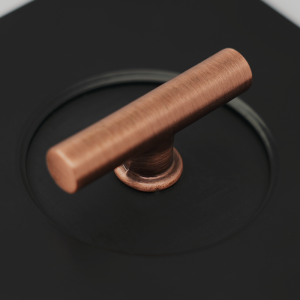
Operated by twisting a knob, these are durable and precise.
- ONE WAY Rotary: Controls one device.
- Double ONE WAY Rotary: Controls two devices simultaneously.
- Multi-Position Rotary: Offers multiple ON/OFF settings.
Applications include hallways, staircases, or even industrial/lab equipment.
- INTERMEDIATE and Two-Way Switches
- Two-Way Switch (Converting Switch): Controls a light from two locations.
- INTERMEDIATE Switch: Used when three or more control points are needed, often combined with two two-way switches.
Perfect for long corridors, staircases, or large halls.
- Dimmer Switches’
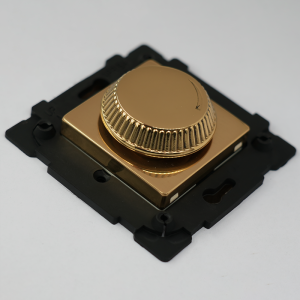
Dimmer switches adjust brightness instead of just switching ON/OFF.
- Benefits: Save energy, extend bulb life, and create mood lighting.
- Applications: Bedrooms, living rooms, restaurants, offices.
- Available in manual, touch, or smart remote-controlled models.
- SCHUKO IP Sockets
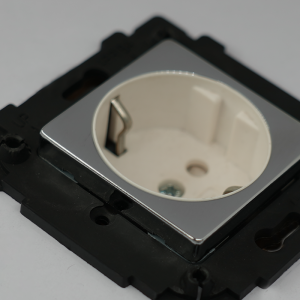
Equipped with an earth (ground) connection to enhance safety and protect sensitive electronics.
- Applications: Refrigerators, TVs, computers, home theaters, lab equipment.
- Benefits: Prevents electric shock and damage from surges.
- Media Sockets (Telephone, Antenna, Network, USB)
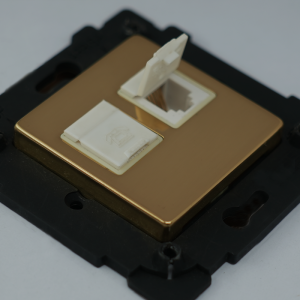
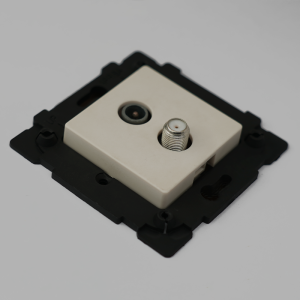
Provide easy connectivity for modern living and workspaces.
- Telephone: Landline connection.
- TV Antenna: For cable/TV receivers.
- LAN Network: High-speed internet.
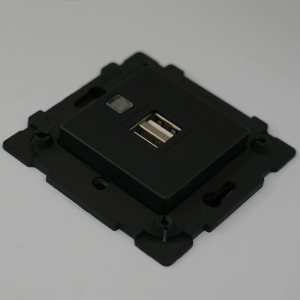
- USB/USB-C: For charging and data transfer.
Common in living rooms, offices, classrooms, and conference halls.
- Control Mechanisms
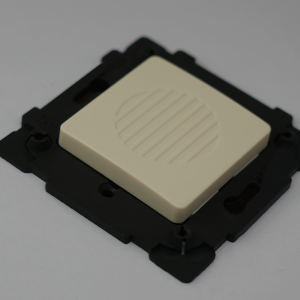
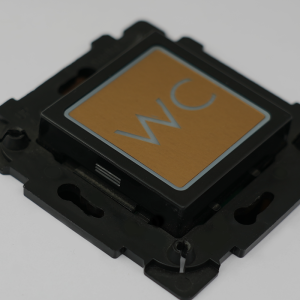
Specialized mechanisms for automation and convenience:
- Buzzers: Audio alerts for errors or warnings.
- Indicator Lights: Show ON/OFF status.
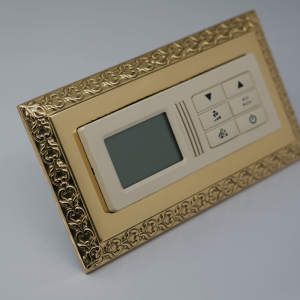
- Thermostats: Manage room temperature.
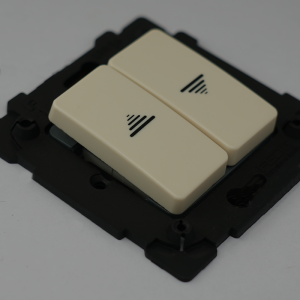
- Curtain Controllers: For electric blinds/curtains.
- Fan Coil Controls: Adjust air conditioning and heating.
Together, these create the foundation for smart home solutions.
Guide to Matching Mechanisms with Different Areas of the Home
The correct choice of switches, sockets, and control mechanisms not only provides easier usability but also helps with the beauty and harmony of interior decoration. Below is an explanation of how to adapt mechanisms to different areas of the home:
Living Room and Reception Area
-
Switches and dimmers: Using double switches or dimmers to control multiple ceiling lights or the main chandelier allows the ambient light to be adjustable.
-
Media sockets: For TV, sound systems, and smart devices, network and USB sockets are practical.
-
Control mechanisms: Electric curtains and thermostats to create ideal environmental conditions.
In the reception area, with one double switch you can control both the main chandelier and hidden lights, and with a dimmer adjust the light intensity to suit both parties and movie nights.
Kitchen
-
Single-pole and double-pole switches: Suitable for ceiling and under-cabinet lights.
-
Grounded sockets: Essential for refrigerator, microwave, and small washing machines.
-
USB or telephone sockets: For charging mobile phones or connecting small appliances.
Cabinet lights are controlled by a double switch so they are only on when needed, reducing electricity consumption.
Bedroom
-
Dimmers and single-pole switches: For bedside lamps and soft room lighting.
-
Control mechanisms: Electric curtains and thermostats to adjust light and temperature.
-
Media sockets: USB ports for charging phones and laptops.
At bedtime, curtains close and room light is dimmed with a dimmer, without having to leave your bed.
Bathroom
-
Single-pole or double-pole switches resistant to humidity.
-
Grounded sockets: For shaver or hairdryer.
-
Control mechanisms: Buzzers or warning lights for safety, especially in humid spaces.
A grounded socket next to the sink allows safe use of hairdryers and shavers, and a moisture-proof light switch provides adequate lighting.
Office and Commercial Spaces
-
Double and two-way switches: For controlling hallway and room lights from multiple points.
-
Network and USB sockets: For computers, phones, and office equipment.
-
Control mechanisms: Thermostat, electric curtains, and fan coil units for managing temperature and airflow.
In an office, with a two-way switch you can control hallway lights from both ends, and network/USB sockets equip every desk.
7. Key Tips for Buying from ZEMGROUP
Variety of Models
-
ZEMGROUP offers various switches including single-pole, double-pole, lever, rotary, dimmer, and cross switches.
-
Selection based on function, color, design, and material is available.
Quality and Standards
-
All products are manufactured according to building electrical and safety standards.
-
Internal mechanisms are highly durable and resistant to voltage fluctuations.
After-Sales Services
-
Installation support, parts replacement, and technical consultation.
-
Guidance on adapting mechanisms to different spaces and project requirements.
Compatibility with Frames and Colors
-
Ability to combine switches and sockets with halogen frames, colored frames, and interior decoration.
-
Compatibility with modern, classic, and luxury styles.
Frequently Asked Questions (FAQ)
What is the difference between a single-pole and a double-pole switch?
-
A single-pole switch controls one circuit, while a double-pole switch independently controls two circuits, making it suitable for multiple lights or devices.
What is the function of a grounded socket?
-
It prevents electric shock and protects sensitive devices against surges or short circuits.
When do we use a cross switch?
-
When we want to control a light from three or more points, used together with two-way switches.
What is the difference between a dimmer and a regular switch?
-
A regular switch only turns the current on or off, while a dimmer adjusts the brightness and controls the ambient lighting.