

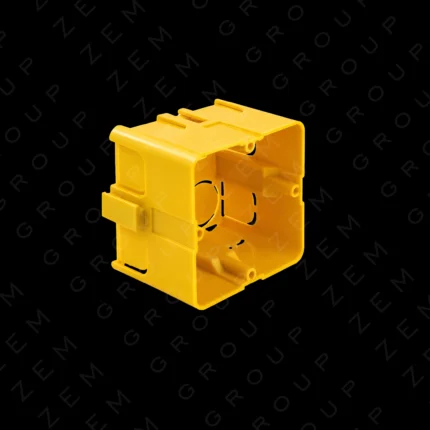
Switch and Socket Backbox
A switch and socket backbox is one of the most important infrastructure components in a building’s electrical wiring system. Although it may seem simple at first glance, it plays a crucial role in electrical safety, wiring organization, and the durability of switches and sockets. Choosing a standard backbox can prevent many problems, such as loose switches, incomplete connections, damaged wires, and even electrical hazards.
In modern construction projects, using a standard switch and socket backbox is not merely a choice but a technical necessity. For this reason, on this page, we will take a comprehensive look at the different types, applications, prices, and important considerations when buying a switch and socket backbox.
Best Switch and Socket Backbox
The best switch and socket backbox is a model that can meet the requirements of a safe electrical wiring system in terms of both construction quality and installation standards. These backboxes typically feature:
- Made from heat-resistant materials such as polycarbonate or reinforced PVC
- High structural strength to prevent deformation in plaster or cement
- Precise design for easy installation of switches and sockets
- Suitable resistance to pressure and impact during installation
- Compatibility with various modern and classic switches and sockets
When choosing the best switch and socket backbox, it is important to remember that poor-quality products can lead to significant repair costs in the future. Therefore, using products from reputable brands and choosing standard backboxes is highly recommended.
For more information and to purchase a standard product, you can use the following link:
Buy Electrical Backbox
Features of Plastic Backboxes
- Affordable and cost-effective
- Lightweight
- Good resistance to moisture
- Quick and easy installation
- Suitable for large-scale construction projects
However, in more demanding professional projects or locations where wiring pressure is high, it is better to use deeper or more durable models.
The price of a plastic switch and socket backbox is generally lower than that of metal or industrial models, but the choice should always be based on the actual requirements of the project.
Standard Dimensions and Sizes of Switches and Sockets
One of the most important factors when choosing and purchasing a switch and socket backbox is paying attention to its standard dimensions. Proper dimensions ensure that switches and sockets can be installed correctly, provide sufficient space for wiring, and ultimately result in a level and safe installation.
Standard Switch and Socket Backbox Dimensions
Typically, recessed switch and socket backboxes have the following standard dimensions:
- Internal diameter: approximately 60–70 mm
- Standard depth: approximately 45–60 mm
- Center-to-center spacing in multi-gang models: usually 70 mm in common building electrical systems
These dimensions may vary slightly depending on the type of backbox, such as single-gang, multi-gang, deep, or standard models. However, the primary purpose of all standard models is to provide sufficient space for the safe installation of switches and sockets.
Why Standard Dimensions Matter
Using a backbox with non-standard dimensions can cause various problems, including:
- Insufficient space for wiring and excessive pressure on cables
- Difficulty installing switches and sockets on the wall
- Misalignment of frames in multi-gang installations
- Reduced safety of electrical connections
- The need to remove and repair parts of the wall
Important Tips for Buying a Switch and Socket Backbox
To make the right choice, consider the following points:
- Always select the backbox according to the building’s electrical wiring plan.
- Use standard backboxes from reputable brands.
- Pay attention to the appropriate depth for wiring.
- For modern projects, use multi-gang backboxes.
- Do not sacrifice quality for a lower price.
Applications of Switch and Socket Backboxes in Buildings
A switch and socket backbox is not simply a basic component; it plays an important role in the overall performance of an electrical system. Its main applications include:
- Securing switches and sockets inside the wall
- Protecting electrical connections
- Preventing damage to wires
- Organizing internal wiring
- Increasing building safety
How to Install a Switch and Socket Backbox: Important Installation Tips
One of the most important considerations during electrical wiring is the correct installation of switch and socket backboxes in both single-gang and multi-gang configurations. Making the right choice at this stage affects the final installation quality and helps prevent future problems such as loose switches or misaligned devices.
Installing a Single-Gang Switch or Socket

When installing a single switch or socket, standard single-gang backboxes should be used. For proper installation, a spacer is typically used to maintain the correct distance and alignment with other backboxes or the wall surface.
Using a spacer in this configuration helps ensure that:
- The distance between backboxes remains accurate and standardized
- Switches and sockets are installed without misalignment
- Additional backboxes can be added in the future if the system needs to be expanded
- The final installation looks clean and professional
Installing Multi-Gang Switches and Sockets: Two-Gang, Three-Gang, Four-Gang, etc.

When several switches or sockets need to be installed side by side, such as two-gang, three-gang, four-gang, or larger configurations, interconnected (modular) switch and socket backboxes should be used.
These backboxes are designed as an integrated unit and are installed directly inside the wall. In this configuration, a separate spacer is no longer required because:
- The spacing between the gangs is precisely set during manufacturing
- All switches and sockets remain perfectly aligned in a single line
- Installation strength is significantly higher
- The final appearance is clean, uniform, and modern
Price of Plastic Switch and Socket Backboxes
Plastic backboxes are among the most economical and widely used types of switch and socket backboxes. These models are generally made from PVC or durable polymers and are highly popular due to their lightweight construction and ease of installation. The purchase price of these backboxes varies depending on their quality and specifications.
Frequently Asked Questions (FAQ)
Is using a deep backbox necessary?
For projects with complex wiring or installations involving smart switches, using a deep backbox is recommended.
Is a plastic or metal backbox better?
For most construction projects, a plastic backbox is sufficient and more economical. However, in specific conditions, more durable models may be a better choice.
When is the best time to install a switch and socket backbox?
The best time is during the electrical wiring stage, before the walls are plastered or finished.

