


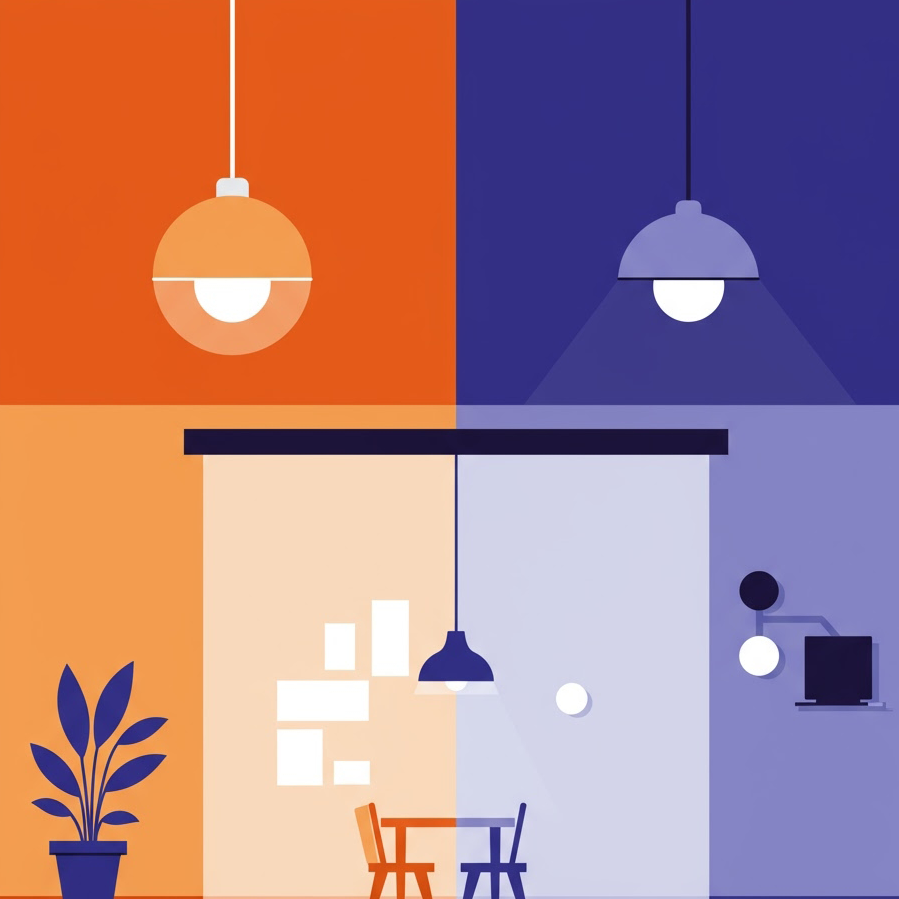
Lighting is one of the fundamental elements of interior design, going beyond merely providing illumination. When you enter a home or workspace, the first thing that conveys the atmosphere of the space is its lighting. Light can make a space feel warm and inviting or cold and lifeless; it can create a sense of luxury and elegance or a simple, minimalist environment.
A common mistake many people make in interior design is relying on a single central light source—such as a chandelier in the center of the ceiling or only one ceiling fixture. The result is usually a uniform, uninteresting environment that not only fails to showcase the beauty of the decor but may also leave some areas inadequately lit for daily activities.
This is where the concept of Layered Lighting becomes important. Layered lighting means using multiple layers of light instead of relying on a single source, so you can have general illumination, light for specific tasks, light to highlight decorative elements, and finally, decorative lighting that creates a luxurious and distinctive atmosphere.
This approach not only makes your home or workplace look more beautiful and professional but also allows you to control lighting according to different needs and situations. For example, the lighting you need for an evening party is completely different from the lighting you prefer while reading or relaxing.
In this article, we will explore the four main layers of lighting:
-
Ambient Lighting – General lighting
-
Task Lighting – Functional lighting
-
Accent Lighting – Highlight lighting
-
Decorative Lighting – Decorative lighting
Understanding the Layers of Lighting
When it comes to interior lighting, many people think that installing a beautiful chandelier or a bright ceiling light in the center of the room is enough to solve the lighting problem. But the truth is that light is not just a tool for seeing; it is a design tool that can transform your living space.
In professional interior design, lighting is executed in multiple layers. Each layer has a specific function and complements the other layers. This approach ensures that:
-
The space has balanced and even lighting.
-
Daily activities such as reading, cooking, or working at a desk can be done more comfortably.
-
Decorative elements such as paintings, vases, or sculptures are highlighted.
-
The home or workplace appears luxurious, modern, and visually appealing.
In general, four main layers of interior lighting are defined:
-
Ambient Lighting (General Lighting)
-
Task Lighting (Functional Lighting)
-
Accent Lighting (Highlight Lighting)
-
Decorative Lighting (Decorative Lighting)
Layer 1: Ambient Lighting (General Lighting)
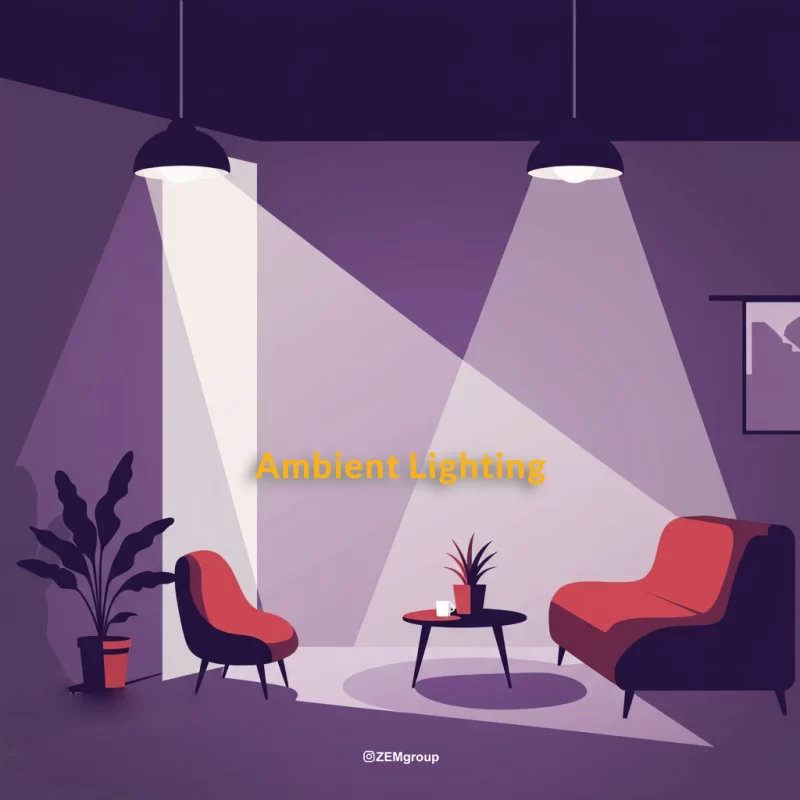
Definition of Ambient Lighting
Ambient lighting forms the foundation of any interior lighting system. This layer provides uniform and overall illumination in a space so that people can move around and perform routine activities comfortably. Essentially, ambient lighting is the light you notice when you enter a room and see the entire space illuminated.
In simple terms, ambient lighting is the primary light of a space—the base upon which other layers are built. Without it, a home or office appears dark and inefficient.
Importance of Ambient Lighting
-
Essential Foundation: This layer is irreplaceable because, without it, other lighting layers cannot function effectively.
-
Creating Balance: General lighting provides uniform illumination and reduces harsh shadows.
-
Comfort and Safety: People can move comfortably, and the risk of bumping into objects is minimized.
-
Design Basis: Lighting design should always start with this layer, with other layers added subsequently.
Suitable Light Sources for Ambient Lighting
Depending on the style of decoration and space requirements, various sources can be used:
-
Ceiling Lights – Recessed or Surface-Mounted (Downlight / Panel Light):
-
Very commonly used.
-
Provide uniform and widespread illumination.
-
Recommended ZEMGROUP products: recessed LED panels and modern ceiling lights.
-
-
Chandeliers:
-
Serve a decorative role as well as providing light.
-
Suitable for living rooms, dining areas, and bedrooms.
-
ZEMGROUP modern and crystal chandeliers for luxurious spaces.
-
-
Linear Lights:
-
Ideal for modern and minimalist spaces.
-
Provide wide, even illumination in line with architectural design.
-
ZEMGROUP linear lights are perfect for kitchens, offices, and large halls.
-
-
Simple Wall Lights:
-
Complement ceiling lighting for better light distribution.
-
Useful in hallways and bedrooms.
-
Key Points in Ambient Lighting Design
-
Appropriate Light Intensity: Light should be bright enough without being harsh.
-
Color Temperature: Choose between warm white or cool white based on décor style. Warm light is usually recommended for living rooms and bedrooms; natural or cool light is better for kitchens and work areas.
-
Even Distribution: Using multiple ceiling lights instead of a single large fixture ensures better light coverage.
-
Coordination with Décor: Ambient lighting should harmonize with wall colors, flooring, and furniture.
Common Mistakes in Ambient Lighting
-
Relying solely on a central chandelier, which can leave corners dark and create a monotonous atmosphere.
-
Choosing excessively bright lights, causing glare and eye strain.
-
Ignoring light color; using cool light in living rooms or bedrooms can make the space feel lifeless.
Practical Examples of Ambient Lighting in the Home
-
Living Room: Central chandelier + recessed ceiling lights for even illumination.
-
Kitchen: Linear or LED panel lights for full coverage.
-
Bedroom: Small chandelier or ceiling light paired with soft wall sconces.
-
Hallway: Small ceiling or linear lights to prevent dark areas.
Recommended ZEMGROUP Products for Ambient Lighting
-
Recessed LED panels: uniform light, low energy consumption.
-
Modern surface-mounted ceiling lights: suitable for small, modern apartments.
-
Modern and crystal chandeliers: for luxurious living rooms.
-
Linear lights: ideal for kitchens and large halls.
Layer 2: Task Lighting (Functional Lighting)
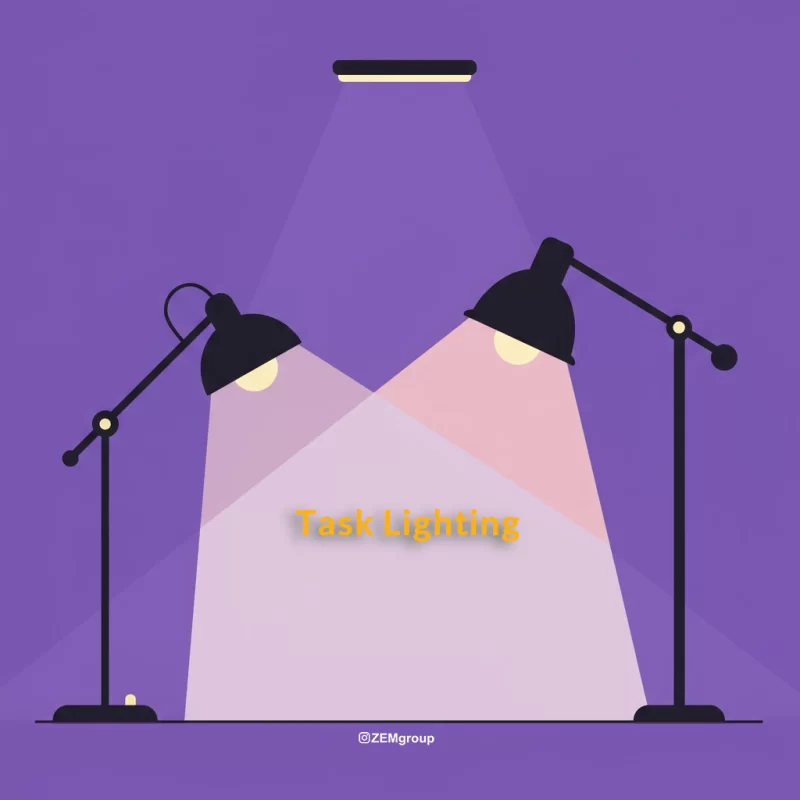
Definition of Task Lighting
Task lighting refers to light sources designed for specific activities. Unlike ambient lighting, which illuminates the overall space, task lighting is focused and precise, enabling tasks to be performed with minimal eye strain.
In simple terms, task lighting is the light you need when reading, cooking, working on a laptop, applying makeup, or dining.
Importance of Task Lighting
-
Enhances Productivity: Provides sufficient light for specific activities.
-
Reduces Eye Strain: Focused lighting ensures less fatigue.
-
Provides Flexibility: Allows lighting adjustment according to the task.
-
Complements Ambient Lighting: Ambient light alone may not meet the needs of detailed tasks.
Suitable Light Sources for Task Lighting
-
Desk Lamps:
-
Ideal for study desks or workstations.
-
LED models with adjustable arms are very practical.
-
-
Under-Cabinet Lights:
-
Perfect for illuminating kitchen countertops.
-
ZEMGROUP LED linear lights are excellent choices.
-
-
Pendant Lights:
-
Positioned above dining tables or kitchen islands.
-
Functional and decorative simultaneously.
-
-
Linear or Strip Lights:
-
Suitable for desks, vanity tables, or bookshelves.
-
Can fit into narrow spaces.
-
-
Adjustable Wall Lamps:
-
Excellent for bedside or next to seating areas.
-
Directional light can be adjusted as needed.
-
Key Points in Task Lighting Design
-
Light Intensity: Brighter than ambient lighting but not glaring.
-
Angle of Illumination: Position lights to avoid disruptive shadows.
-
Color Temperature: Natural light (around 4000K) or slightly cool (5000K) enhances focus.
-
Adjustability: Movable or dimmable fixtures allow customization.
Common Mistakes in Task Lighting
-
Ignoring shadows: Improper placement can cast unwanted shadows during cooking.
-
Using overly warm light: Reduces focus for tasks like reading or computer work.
-
Lack of functional lighting: Many homes rely only on ambient lighting.
Practical Examples of Task Lighting in the Home
-
Kitchen: Under-cabinet lighting + pendant over the island.
-
Study/Workroom: LED desk lamp with adjustable arm + linear ceiling light.
-
Bedroom: Wall or bedside lamp for nighttime reading.
-
Dining: Pendant light over the table for focused illumination.
Recommended ZEMGROUP Products for Task Lighting
-
Under-cabinet LED linear lights: modern design, easy installation, uniform light.
-
Modern pendant lights: suitable for kitchen islands or dining tables.
-
LED desk lamps: for study and work areas.
-
Adjustable wall-mounted lamps: for bedside or vanity areas.
Layer 3: Accent Lighting (Highlighting Specific Features)
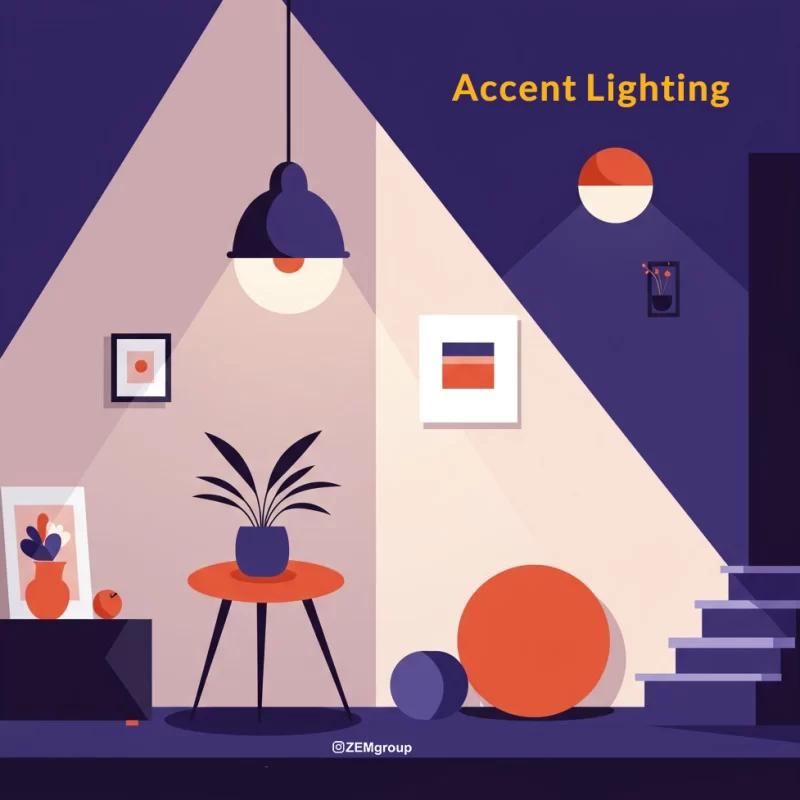
To add depth, identity, and a professional touch to a space, Accent Lighting is used. This layer allows you to highlight important features in your home, whether it’s a painting, a decorative vase, or a textured wall.
Accent lighting acts as the “spice” of lighting design, directing attention to specific points and enhancing visibility of featured elements.
Characteristics of Accent Lighting
-
Focuses on a specific object or area such as a painting, bookshelf, or sculpture.
-
Intensity usually three times higher than ambient light.
-
Creates contrast and visual appeal.
Practical Examples of Accent Lighting
-
Art or Gallery Wall Lighting:
-
Use ZEMGROUP track or magnetic lights to highlight paintings and artwork.
-
-
Highlighting Vases or Décor:
-
Spotlights can turn a special vase or sculpture into a focal point.
-
-
Wall Highlighting:
-
Wall washers enhance textures of brick or feature walls.
-
-
Bookshelves and Display Cabinets:
-
Small recessed lights or subtle projectors provide a luxurious effect.
-
Importance in Different Areas
-
Living rooms: Highlight art, sculptures, or wall sections.
-
Bedrooms: Lighting above the bed or part of the decor.
-
Hallways: Accent lighting for picture frames or decorative walls.
-
Kitchen: Highlight open shelving or decorative elements.
Common Mistakes in Accent Lighting
-
Overuse, diminishing its impact.
-
Improper angles creating unflattering shadows.
-
Low-quality lights distorting the natural look of objects.
Layer 4: Decorative Lighting – The Signature of Luxury
While the previous three layers (Ambient, Task, Accent) provide functional and task-oriented illumination, Decorative Lighting serves an aesthetic and identity-driven role. This lighting is used not for functionality but as a decorative and artistic element.
Decorative lighting transforms a simple space into a unique, eye-catching, and memorable environment.
Features of Decorative Lighting
-
Focuses on beauty rather than illumination.
-
Creates a luxurious, unique atmosphere.
-
Adds an artistic dimension to interior design.
-
Functions as an independent decor element.
Practical Examples of Decorative Lighting
-
Modern and Classic Chandeliers:
-
Serve as centerpieces and artistic elements.
-
-
Decorative Pendant Lights:
-
Over dining tables or kitchen islands, adding a modern luxurious touch.
-
-
Hidden RGB or LED Strip Lights:
-
Installed under TVs, frames, or cabinets for a vibrant effect.
-
-
Table Lamps and Unique Floor Lamps:
-
Add warmth and visual appeal to corners.
-
-
Wall Sconces:
-
Act as artistic features, suitable for living rooms or bedrooms.
-
Importance in Different Areas
-
Living rooms: Chandeliers and pendants for focal points.
-
Kitchens: Linear or pendant decorative lights over islands.
-
Bedrooms: Lamps and wall sconces for a cozy luxurious feel.
-
TV or modern living rooms: Hidden RGB or LED lights under furniture or false ceilings.
Common Mistakes in Decorative Lighting
-
Excessive use cluttering the space.
-
Mismatched designs or color temperatures with overall decor.
-
Ignoring quality or brand, reducing the luxurious effect.
Combining Layers for Professional Lighting
A luxurious interior design is only complete when all four layers—Ambient, Task, Accent, and Decorative—are properly integrated. Ambient lighting provides overall illumination, task lighting ensures precision, accent lighting highlights elements, and decorative lighting adds beauty and identity.
In professional projects, the correct combination enhances both functionality and the luxurious feel throughout the home. Using ZEMGROUP fixtures allows optimal choices for every lighting layer, from recessed and track lights to decorative chandeliers and modern lamps.
| Lighting Layer | Features | Home Applications | ZEMGROUP Product Examples |
|---|---|---|---|
| Ambient Lighting | – General, uniform light – Reduces harsh shadows – Essential foundation | – Living room, kitchen, hallways, bedroom | Modern & crystal chandeliers, recessed (downlight) lights, ceiling pendants |
| Task Lighting | – Focused on specific surfaces or points – Higher intensity than ambient – Reduces eye strain | – Cooking (under-cabinet) – Reading, working – Vanity tasks | Under-cabinet LED, desk & study lamps, wall-mounted lights |
| Accent Lighting | – Highlights objects – ~3x ambient intensity – Creates contrast & visual interest | – Art, sculptures – Feature walls – Shelves & display cabinets | Track/magnetic lights, spotlights, wall washers |
| Decorative Lighting | – Primarily aesthetic – Creates luxurious, artistic feel – Independent design element | – Luxurious living room – Romantic bedroom ambiance – Modern kitchens & halls | Crystal & modern chandeliers, decorative pendants, table/floor lamps, RGB LED strips |
Correct Layer Combinations in Different Spaces
Living Room
-
Chandelier (Ambient): ZEMGROUP modern chandelier for general illumination.
-
Table Lamp (Task): For reading or TV use.
-
Track or Magnetic Light (Accent): Highlights art or decorative vases.
-
Decorative Wall Sconce (Decorative): Adds luxury and artistic touch.
Kitchen
-
Recessed Ceiling Light (Ambient): Uniform general lighting.
-
Under-Cabinet Lighting (Task): For food prep.
-
Pendant over Island (Accent): Highlights island or dining space.
-
Hidden Linear or RGB Lights (Decorative): Adds modern flair.
Bedroom
-
Soft Ceiling Light (Ambient): Base lighting for relaxation.
-
Reading Lamp or Wall Light (Task): For night reading or small tasks.
-
Decorative Wall Sconce or Table Lamp (Decorative): Creates cozy, luxurious ambiance.
Home Office
-
Ceiling or Linear Light (Ambient): Overall illumination for focus.
-
Desk Lamp or Linear Light (Task): Concentrated light for work.
-
Track or Spotlight (Accent): Highlights bookshelves or decorative elements.
Common Mistakes in Layered Lighting
-
Using Accent Lights on TV: Can cause glare, eye strain, and distract from viewing.
-
Overusing Colored or Decorative Lights: Can clutter space and reduce luxury feel; should be used selectively.
-
Neglecting Task Lighting: Leads to insufficient illumination at workstations, kitchen counters, or study areas.
-
Ignoring Color Temperature Coordination: Incorrect light color affects overall ambiance; warm tones (2700–3500K) recommended for relaxation.
Key Tips for Selecting Lights for Layered Lighting
-
Ceiling Height: Low ceilings benefit from recessed or linear lights; high ceilings can accommodate chandeliers or decorative pendants.
-
Style Coordination: Lights should match the interior style; minimalist for modern spaces, crystal or brass for classic spaces.
-
Energy Efficiency and Longevity: LED lights are ideal for energy savings, long lifespan, and color variety.
-
Adjustable or Smart Lights: Dimmable and smart fixtures allow intensity and color adjustments for various moods and situations.
FAQ
-
What is layered lighting and why is it important?
Layered lighting combines multiple types of lighting (ambient, task, accent, decorative) in a space, making it functional, beautiful, and adaptable. -
Which lighting layer is most essential?
Ambient lighting is the foundation; without it, the space appears dark or unbalanced. Other layers enhance and decorate. -
Can accent lighting be used for TV areas?
No, it’s intended to highlight objects like paintings, sculptures, or shelves; using it on a TV causes glare. -
What lights are suitable for task lighting?
Under-cabinet lights in kitchens, desk lamps in study areas, and linear lights over work surfaces are typical choices. -
Is layered lighting useful in small spaces?
Yes, it makes spaces feel larger, cozier, and more functional, with appropriately scaled fixtures. -
What is the best light color for homes?
Warm light between 2700K–3500K is ideal for most interiors; it’s relaxing and compatible with various decor styles. -
Is layered lighting expensive?
Costs vary based on fixtures, but using LED lights and thoughtful design allows a layered lighting setup at reasonable cost.

