


Switches and sockets, although seemingly simple household components, play a crucial role in the aesthetics, safety, and functionality of a building’s electrical system. These devices are used dozens of times a day, and choosing the right type can make daily use more convenient while enhancing the overall appearance of your space.
One of the most important decisions when purchasing switches and sockets is choosing between the two main types: surface-mounted (on-wall) or flush-mounted (built-in).
These two types differ significantly in terms of installation method, wiring, design, safety, durability, and even cost. Making the wrong choice can negatively affect both the functionality of the electrical system and the final interior design aesthetics.
Flush-mounted switches and sockets are commonly used in new buildings and modern spaces because the main body is installed inside the wall, leaving only the front face visible. In contrast, surface-mounted switches are often used in older buildings, industrial environments, or areas where quick maintenance and easy access are needed.
In this article from ZEMGROUP, we will examine the differences between surface-mounted and flush-mounted switches and sockets from all aspects: wiring, installation, color, materials, safety, price, and compatibility with interior design styles. If you are constructing or renovating your home and are unsure which option is more suitable, this guide will help clarify your choice.
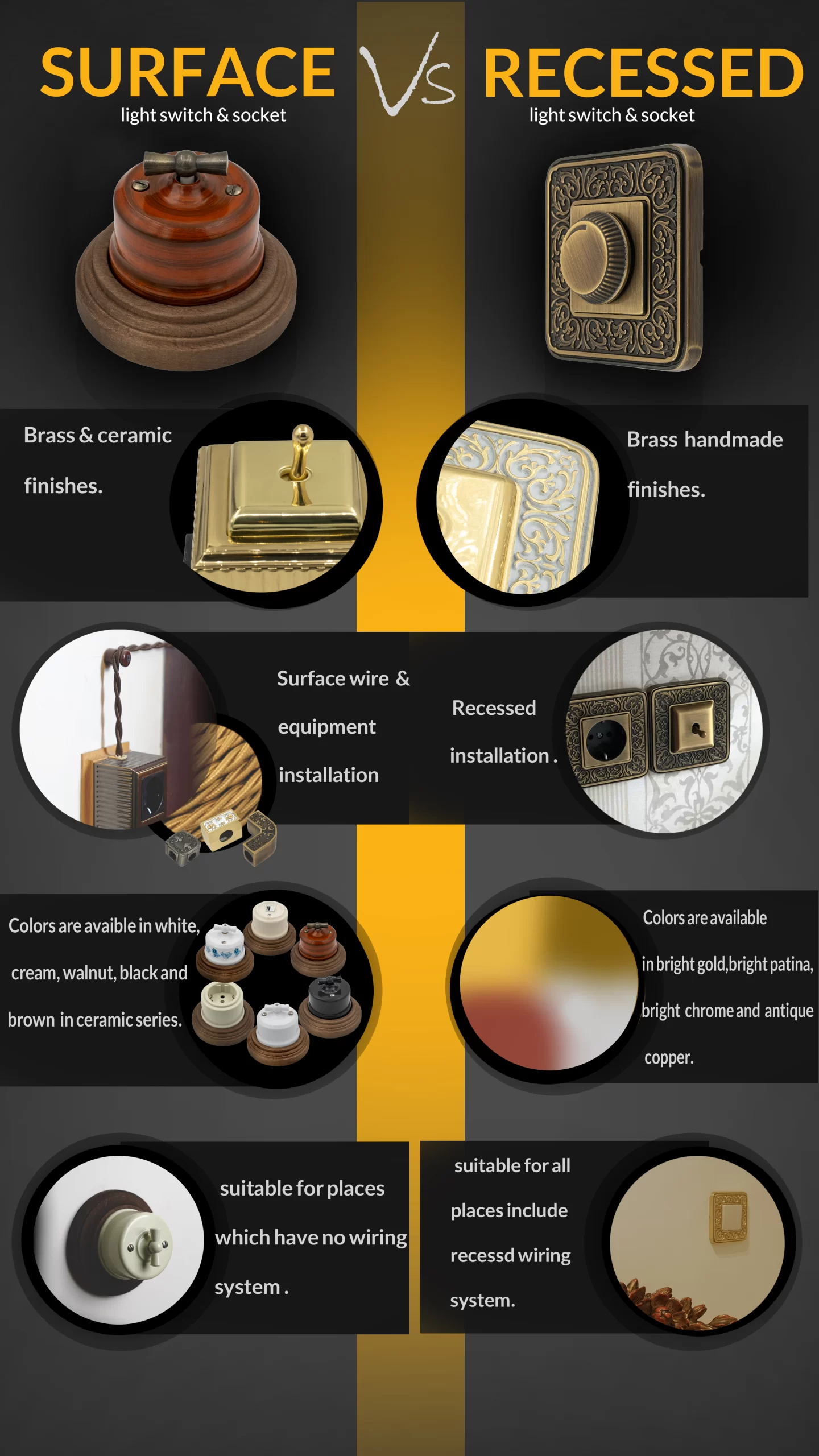
Differences in Installation and Wiring
One of the fundamental differences between surface-mounted and flush-mounted switches lies in the installation method and electrical wiring route. This aspect affects not only aesthetics but also safety, cost, and system durability.
Flush-Mounted Switches and Sockets
In flush-mounted systems, most of the device’s body is installed inside the wall, with only the front plate visible.
Installation steps:
-
A flush-mounted box is first installed in the wall to house the wires and connections.
-
Electrical wiring runs inside the wall to the box.
-
The switch or socket is then attached to the box.
Features and advantages:
-
Wires are completely hidden inside the wall, creating a clean and organized appearance.
-
Higher safety as there is no direct contact with wires or risk of impact.
-
Greater resistance to dust, moisture, and physical damage.
-
Considered a professional and long-lasting choice for new construction or renovations.
Technical note: Wiring for flush-mounted devices should be completed before plastering or painting because wall chases and embedded conduits are required.
Surface-Mounted Switches and Sockets
Surface-mounted switches are installed directly on the wall or surface without a flush box. Wiring typically runs on the wall inside protective conduits or ducts.
Features and advantages:
-
Quick and easy installation with no need for wall chases or demolition.
-
Suitable for older buildings or areas where full renovation isn’t possible (e.g., workshops, storage rooms, or warehouses).
-
Simple maintenance and wiring changes are possible.
-
Lower installation cost and labor requirement.
Technical note: For added safety, wires should be placed in protective ducts to prevent impact or accidental contact.
Technical Comparison of Wiring
| Feature | Surface-Mounted | Flush-Mounted |
|---|---|---|
| Wiring type | On-wall | Inside wall and box |
| Need for wall demolition | No | Yes |
| Aesthetic appeal | Less, but suitable for industrial style | Higher, matches modern interior |
| Safety from contact | Medium | Very high |
| Installation ease | Quick and easy | Time-consuming and specialized |
| Repair and modification | Easy | More difficult |
| Suitable for | Older buildings, industrial spaces | New buildings, luxury interiors |
Differences in Appearance and Design
The appearance of switches and sockets significantly influences the overall visual impression of a space, especially in luxury homes where details matter.
Flush-Mounted: Minimalist and Modern
Since the main body of flush-mounted switches is hidden inside the wall, they create a clean, smooth, and uniform look. Only the front plate is visible, making walls appear neat and elegant.
Design features:
-
Excellent compatibility with modern, minimalist, and luxury interiors.
-
Wide range of colors and materials, from simple white plates to glass, metal, brass, or wood.
-
The front plate can be color-matched with the wall or other interior elements.
-
Sleek design with soft edges fits perfectly in contemporary spaces.
Popular examples: Black glass, matte brass, or silver stainless steel flush-mounted switches are highly popular in modern and luxury interiors.
Suitable spaces: Luxury living rooms, minimalist interiors, modern kitchens, and stylish offices.
Surface-Mounted: Bold and Distinctive
Surface-mounted devices protrude from the wall, creating a more prominent visual presence. While this may limit their use in modern minimalist designs, it can be an advantage in classic, industrial, or retro interiors.
Design features:
-
More visually prominent and can serve as a decorative element.
-
Often made of durable materials like reinforced plastic, metal, or Bakelite.
-
Metal or brass models in industrial settings convey an authentic, vintage look.
-
Wooden or painted models suit classic or rustic interiors.
Suitable spaces: Industrial-style cafes, workshops, restored classic homes, and retro or antique-themed interiors.
Comparison of Aesthetics
| Feature | Flush-Mounted | Surface-Mounted |
|---|---|---|
| Wall placement | Level with the wall | Protruding from the wall |
| Visual impact | Sleek, minimalist, organized | Bold, traditional, industrial |
| Color and frame variety | Very high | More limited (but versatile in specific styles) |
| Interior compatibility | Modern, minimalist, luxury | Classic, industrial, retro |
| Visual perception | Clean and tidy | Prominent and distinctive |
Design tip: For simple, modern spaces, flush-mounted is ideal. For unique, industrial, or vintage aesthetics, metal or brass surface-mounted switches create a distinctive effect.
Materials, Colors, and Interior Harmony
Switches and sockets are not only functional but also decorative elements. Their color, material, and style should harmonize with walls, frames, lighting, and furniture.
Flush-Mounted: Wide Color and Material Range
Modern flush-mounted switches come in a variety of colors and materials, making them ideal for minimalist and luxury spaces.
Colors:
-
White (glossy or matte) for bright, minimalist interiors
-
Matte black for modern designs and contrast walls
-
Silver or stainless steel for industrial or professional settings
-
Gold, champagne, bronze for luxury and classic spaces
-
Unique shades like olive green, dark gray, or light beige for contemporary interiors
Materials:
-
ABS plastic: Lightweight, cost-effective, widely used
-
Tempered glass: Luxurious, modern, color-mixable
-
Metal (stainless steel or aluminum): Durable and premium
-
Brass or chrome: Classic or royal-style interiors
-
Wood or wood-effect: Warm, natural designs
Interior harmony:
-
Glass black or white for modern homes
-
Brass or wood for classic/luxury spaces
-
Neutral colors like gray or silver for offices or minimalist settings
Surface-Mounted: Simplicity with Customization
Surface-mounted models, although limited in design variety, are eye-catching in industrial or retro interiors.
Colors:
-
White, cream, gray (most common)
-
Black or silver in industrial styles
-
Brass or copper for retro or classic designs
-
Bold colors (blue, red, green) for cafes or galleries
Materials:
-
Reinforced plastic and Bakelite: Heat- and impact-resistant, lightweight, cost-effective
-
Metal (aluminum or painted steel): Ideal for industrial or workshop settings
-
Wood (natural or composite): Classic or rustic designs
-
Brass or bronze: Antique or vintage interiors
Decor tip:
-
In spaces with attention to lighting and decor, flush-mounted glass or metal frames create a clean and harmonious look.
-
Surface-mounted metal or brass switches give the walls a unique character and industrial charm.
Wiring and Safety Comparison
Surface-Mounted Wiring
-
Wires run on the wall, usually inside plastic or metal conduits.
-
Advantages:
-
Easy access for repair or rerouting
-
Lower installation cost (no plastering required)
-
Suitable for older buildings or industrial settings
-
-
Disadvantages:
-
Wires are exposed on the wall, more vulnerable to physical damage or moisture
-
Must use waterproof models (IP44/IP55) in wet areas
-
Flush-Mounted Wiring
-
Wires run inside the wall in PVC or heat-resistant conduits.
-
Advantages:
-
No contact with humans or mechanical damage
-
Protected from moisture and heat
-
Clean, uniform wall appearance
-
-
Disadvantages:
-
Repairs or modifications require wall opening, so careful planning is essential
-
Installation Comparison
Flush-Mounted
-
Requires embedding a flush box inside the wall and wiring before plastering.
-
Time-consuming, usually installed by qualified electricians.
-
Any installation error may require wall opening for adjustments.
-
Suitable for new buildings or full renovations.
Surface-Mounted
-
Quick and easy, no wall chases or demolition needed.
-
Wiring runs on the wall inside conduits, allowing fast maintenance or rerouting.
-
Can be installed without special tools or expertise, though professional installation is recommended for safety.
Frequently Asked Questions (FAQ)
1. Which is better: flush-mounted or surface-mounted?
-
Depends on the building type and interior design. For new or fully renovated spaces seeking a minimalist, sleek look → flush-mounted. For older buildings or quick installation → surface-mounted.
2. Is surface-mounted safe?
-
Yes, but wires should be inside protective conduits, and waterproof models (IP44/IP55) should be used in wet areas.
3. Can flush-mounted switches be installed in older buildings?
-
Yes, but wall demolition and flush box installation are required, making it time-consuming and costlier.
4. Which type is better for industrial spaces?
-
Surface-mounted, because installation is faster, maintenance is easier, and protective conduits can be used.
5. Can flush-mounted switches be upgraded to smart devices?
-
Yes, flush-mounted wiring allows installation of Wi-Fi or Bluetooth modules without altering the wall appearance.
6. Are surface-mounted switches suitable for modern interiors?
-
Usually not recommended for minimalist modern designs, unless an industrial or retro style is desired. Flush-mounted is preferred for luxury or minimalist spaces.
7. Is repairing flush-mounted switches difficult?
-
Yes, since wiring is inside the wall, repairing may require opening the plate or part of the wall, but they have longer durability.
8. Which type installs faster?
-
Surface-mounted is faster and requires less technical expertise.

