


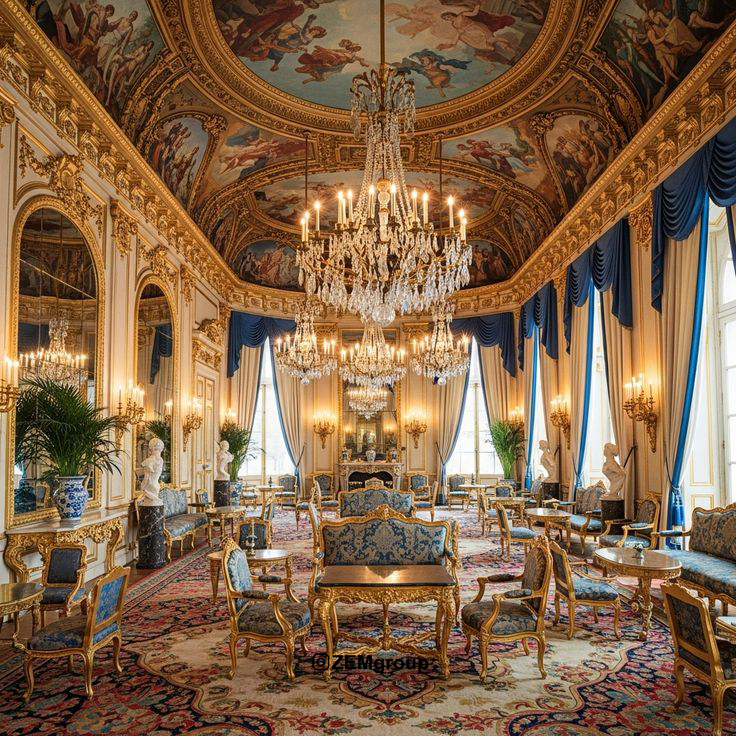
Majesty and Grandeur in Royal Interior Design
Royal interior design, or Royal Style, is one of the most authentic and majestic design styles, inspired by the palaces and monarchies of Europe. This style showcases opulence, power, and elegance, where every detail—even the smallest—is designed to display grandeur and harmony. In royal design, there are no simple or insignificant elements; from carved wooden motifs to mirror frames, from heavy velvet curtains to golden decorative switches and sockets, everything must convey a sense of luxury and authenticity.
Historically, royal palaces in Europe and Iran were renowned for their grand architecture, high ceilings, decorative columns, crystal chandeliers, and golden furniture. Today, this style has been cleverly adapted for modern luxurious homes. Modern royal style is no longer limited to palaces; it is now present in many luxury houses, villas, and even exclusive apartments, combining the essence of classic opulence with contemporary functionality.
One of the most important elements in successfully implementing this style is lighting and intricate details. Light plays a crucial role in highlighting royal elements. The reflection of light on gold, crystal, and marble adds brilliance and depth to the space. Choosing the right light source and color can transform an ordinary room into a luxurious and visually stunning environment.
Alongside lighting, luxurious switches and sockets are highly significant in royal design. Though they may appear minor at first glance, in luxurious and classic styles, their harmony with other elements—walls, frames, and furniture—plays a major role in maintaining design cohesion. Switches and sockets with brass, gold, or stone frames not only serve a functional purpose but also act as decorative elements themselves.
Philosophy and Origins of Royal Interior Design
The royal style has its roots in the grandeur of historic palaces and castles. This style emerged during the reigns of great European empires, such as France, England, Italy, and Russia, where interior design was not only for comfort but also a display of power, wealth, and social status. In Iran, from the Safavid to Qajar periods, similar elements of royal architecture existed, highlighting a passion for ornate details and remarkable decoration.
In Europe, the Baroque period in the 17th century marked the beginning of lavish design. Heavy ornamentation, intricate patterns, gilded frames, and large crystal chandeliers were widely used. Later, the Rococo style introduced more delicate designs with lighter colors, giving spaces a romantic and artistic appeal. The Neoclassical style in the 18th and 19th centuries drew inspiration from Greek and Roman architecture, reintroducing order, symmetry, and relative simplicity to royal interiors while retaining a dignified and aristocratic spirit.
In the East, particularly Iran, royal splendor combined traditional art and cultural symbols. Palaces such as Golestan, Niavaran, and Sa’dabad, with mirrored ceilings, delicate stucco work, exquisite carpets, and enormous chandeliers, exemplify opulence and authentic beauty. Light played a majestic and spiritual role in these spaces, reflecting off glossy surfaces and conveying a sense of eternity and grandeur.
The central philosophy of royal interior design is harmony between power, beauty, and artistic detail. Every element has a special place; nothing is accidental. From wall colors to carved furniture details and even the material of door handles or switch frames, everything signals order and dignity.
A defining characteristic across all royal styles is symmetry. This principle ensures balance, grandeur, and harmony in a space. In addition, lighting in royal architecture serves not only for illumination but also to highlight details. Historic designers knew how to make spaces vibrant and majestic by reflecting light on metal, glass, and stone surfaces.
Ultimately, royal style is more than a decorative choice—it is a cultural and aesthetic approach. It represents values like authenticity, stability, grandeur, and reverence for art. Even today, centuries later, it continues to inspire modern designers and luxury brands. Many contemporary luxury homes and villas use classic elements with modern execution, preserving authenticity alongside modern comfort.
Key Elements in Royal Interior Design
The essence of royal design can be summarized in a few words: symmetry, opulence, detail, and authenticity. Every component is designed with precision and finesse to convey wealth and grandeur. The most important visual and material elements are:
1. Luxurious and Authentic Materials
Unlike modern minimalist styles, royal design emphasizes expensive and textured materials:
-
Carved natural wood: Forms the foundation for furniture and wall panels, with floral and classic motifs to enhance grandeur.
-
Gold and bronze: Primary symbols of opulence, used in mirror frames, picture frames, chair arms, and even around switches and sockets.
-
Marble and granite: Used in flooring, columns, and tables to convey strength and majesty.
-
Heavy and aristocratic fabrics: Velvet, silk, and satin for curtains, upholstery, and bedding.
2. Colors — The Language of Opulence
Colors in royal interiors convey meaning, not just beauty:
-
Gold and cream: The main colors, conveying warmth and brilliance.
-
Burgundy and wine red: Represent tradition, power, and royal grandeur.
-
Royal blue: Popular among European monarchs, symbolizing calm and authenticity.
-
Emerald green and light beige: Used to balance and harmonize bold colors.
Typical combinations include soft contrasts, e.g., cream walls with golden frames and burgundy velvet curtains create a quintessentially royal atmosphere.
3. Classic Furniture Forms
Furniture in royal interiors is inspired by Baroque and Neoclassical eras. Legs and arms are carved, backs are high and curved, and fabrics feature floral or damask patterns. Tables often have golden bases with marble tops. Chairs are adorned with brocade fabrics and glossy wooden arms.
4. Decorative Details and Accessories
In royal spaces, no area is empty. Accessories complement the grandeur:
-
Gold-framed mirrors with intricate carvings
-
Multi-layered curtains with tassels and heavy drapery
-
Classical paintings, bronze sculptures, and candelabras
-
Exquisite Persian or European rugs with royal patterns
The more intricate and abundant the details, the more opulent the space appears—provided symmetry and order are maintained.
5. Functional Details in Harmony
Even practical elements must align with the design language. Window frames, door handles, switches, and lamp frames should match materials like gold, bronze, or stone to maintain visual cohesion. In royal style, nothing is “plain”; every component contributes to a grand composition.
Lighting in Royal Interiors — Showcasing Grandeur
Nothing conveys the majesty of royal style better than light. Lighting is not just for illumination but for creating a sense of splendor, highlighting textures, and bringing decorative details to life.
1. The Philosophy of Light
In palaces and royal mansions, light always had a visual and emotional role. Reflection on crystal, mirrors, gold, and marble surfaces makes spaces appear vibrant and deep. Light should be warm, soft, and luxurious—not harsh or glaring.
2. Light Sources in Royal Interiors
a) Crystal Chandeliers: The centerpiece of royal lighting. Chandeliers attract the eye and are often made of cut crystal with golden or bronze frames. In large halls, multi-tiered chandeliers provide ample illumination while acting as the main decorative feature.
b) Wall Sconces: Installed near mirrors, paintings, or columns to provide accent lighting. Bases are usually bronze or gold with frosted or crystal shades.
c) Table Lamps and Floor Lamps: In bedrooms and living rooms, lamps with gold or brass bases and fabric shades offer soft, warm light for comfort and ambiance.
d) Recessed and Hidden Lighting: In modern royal interiors, LED recessed lights are used to enhance decorative ceilings or frames subtly, without overpowering the main light sources.
3. Light Characteristics
-
Color: Always warm (golden, soft yellow, or amber). Cool white or blue is rarely used.
-
Intensity: Balanced and adjustable; dimmers are common for controlling chandelier or wall light brightness.
-
Direction and Reflection: Light should highlight textures like carvings, stucco, and frames.
4. Combining Light with Materials
Reflection from gold, mirrors, crystal, and marble is key. Designers often use warm, spot, or accent lighting to create vibrant and luxurious visual effects.
5. Defining Space with Light
Lighting defines the identity of each space:
-
Grand halls: striking, majestic illumination
-
Bedrooms: soft, calming light
-
Entrances and corridors: inviting, showcasing grandeur
Royal lighting combines art, science, and spatial understanding; even the most luxurious furniture and decoration appear lifeless without proper illumination.
The Role of Switches and Sockets in Royal Interiors
In royal interiors, no detail is insignificant. Switches and sockets must harmonize with the overall design. They are not just functional devices but part of the visual language of the room.
1. Small Element, Big Impact
In richly decorated spaces with ornate carvings and heavy furniture, even the smallest modern element can disrupt harmony. Classic, luxurious switches and sockets with brass, gold, or intricate frames are essential.
2. Suitable Materials
Brass, bronze, gold, natural wood, and marble are common. ZEMGROUP offers hand-crafted brass or gold-plated switches and sockets that seamlessly integrate into royal or classic projects.
3. Colors and Design Details
Colors should match wall and décor elements. Combinations like gold with ivory, bronze with cream, or silver with off-white are harmonious. Embossed or carved frames suit walls with classic stucco patterns.
4. Coordination with Lighting and Furniture
Switches near consoles, mirrors, or entrances should harmonize with chandeliers and lamps. Dimmer switches allow adjustment of chandelier and wall sconce brightness, combining technical function with aesthetic refinement.
5. Symmetrical Placement
Symmetry is essential; switches and sockets should align with the spatial balance of lights, mirrors, and furniture.
6. Modern Technology with Classic Appearance
Modern solutions like touch-sensitive or smart switches can be encased in classic gold or brass frames, allowing control of lights and curtains while maintaining a royal aesthetic.
7. Customization
For bespoke projects, switches and sockets can feature gold patterns or palace logos, enhancing authenticity and distinction. Frames can match wall textures or colors for seamless integration.
Three Luxurious Switch and Socket Models for Royal Interiors
1. Palace light switch and socket Model: Classic design with Swarovski crystals in brass frames; available in gold and silver, ideal for royal interiors.
2. Swarovski Art light switch and socket Model: Artistic metal frames with Swarovski crystals, offering colorful coordination with diverse décor.
3. Sand and Velvet light switch and socket Model: Textured, velvet-inspired design, providing warmth and softness, suited for lighter-themed royal spaces.
Combining these switches with crystal chandeliers, bronze wall sconces, and other decorative elements amplifies grandeur.
Three Swarovski Crystal Spotlight Models for Royal Interiors
1. Palace Swarovski Crystal Spotlight: Features cut Swarovski crystals and classic design; ideal for gold and silver-themed royal spaces.
2. San Sebastian Swarovski Crystal Spotlight: Brass alloy with artistic crystal designs; suited for classic and artistic royal interiors.
3. Paris Swarovski Crystal Spotlight: Elegant and modern crystal design; perfect for light-themed or modern royal interiors.
Frequently Asked Questions (FAQ)
1. Are luxurious switches and sockets purely decorative or functional?
They are fully functional, adhering to safety standards while offering durability and aesthetic appeal.
2. Suitable materials for royal switches and spotlights?
Brass, bronze, gold (polished or matte), Swarovski crystal, marble, or frosted glass.
3. What colors suit royal switches and spotlights?
Gold or bronze for dark/classic interiors; silver or polished chrome for light/modern spaces; crystal or glass for added luxury.
4. Do luxurious switches or spotlights require rewiring?
No; most are compatible with standard wiring, though professional installation is recommended.
5. How to coordinate with chandeliers and other lights?
Match material, color, and design with chandeliers and sconces; ensure light temperature aligns.
6. Can these items be used in renovation projects?
Yes; ZEMGROUP luxury products easily integrate with classic, neoclassical, or modern royal interiors.
7. Are switches and spotlights easy to clean?
Most have durable, cleanable surfaces; use soft cloths and mild cleaners to maintain crystal shine.

