



The kitchen is one of the most important spaces in any residential or commercial building, as its functionality and safety directly impact the comfort and health of occupants. This space is not only used for cooking and storing food but, with proper design and layout, can significantly enhance the user experience. The following provides a comprehensive review of architectural standards, electrical systems and outlets, civil engineering design, gas safety, and practical kitchen principles.
A kitchen is an area intended for food preparation and storage. From an architectural perspective, there are three main types of kitchen layouts:
-
Independent Kitchen
-
Open Kitchen
-
Wall Kitchen
From a usage standpoint, kitchens can be categorized as residential, commercial/public, or industrial.
Electrical Systems and Outlets
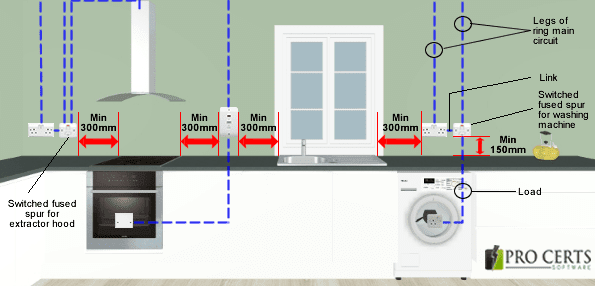
According to engineering regulations for kitchen wiring, the key requirements are as follows:
Zoning:
-
Zone 1: The interior of the kitchen up to 2.25 meters from the floor.
-
Zone 2: Kitchen space from 0.6 meters to 2.25 meters in height.
-
Areas outside Zones 1 and 2: All other kitchen spaces.
Electrical Equipment and Outlet Requirements:
-
In Zones 1 and 2, all electrical devices, including outlets and switches, must be waterproof and moisture-resistant.
-
Outlets in Zones 1 and 2 must be protected with residual current devices (RCDs).
-
In Zone 1, switches should be installed at a height of 1.2 to 1.4 meters from the floor.
-
In Zone 2, switches should be installed above 1.4 meters.
-
In Zone 1, outlets should be installed at a height of 0.4 to 1.2 meters from the floor.
-
In Zone 2, outlets should be installed above 1.2 meters.
-
Special outlets for kitchen appliances, such as dishwashers, may have different placement requirements.
-
Heat-generating appliances, like stoves, should be positioned at a safe distance from electrical equipment.
Architecture
-
Floor areas and dimensions, including shelving, must be measured outside built-in cabinets, ledges, and door/window thresholds.
-
Access to living areas should not pass through the kitchen, but access to the kitchen should be available from the main space without obstructing activity.
-
Minimum floor area, including under-shelf areas, should be 5.5 m², and the minimum width between main walls should be 1.80 meters.
-
At least 2.75 m² of free workspace outside shelving areas should be maintained.
-
Independent kitchens must have natural light. For open or wall kitchens, artificial lighting and ventilation must be used if natural light and ventilation are not feasible and allowed by regulations. All kitchens must have mechanical exhaust systems (hoods).
-
Floors of independent and open kitchens, and work areas in wall kitchens, should be covered with tiles or similar easy-to-clean materials.
-
Walls around sinks and stoves in all kitchen types should be covered with tiles or similar materials up to 1.50 meters in height.
-
Wall kitchens are not allowed in residential units larger than 75 m² if they open directly to the main living area. Open or wall kitchens in such units should not have a direct view of the primary cooking and workspace areas.
-
Independent or open residential kitchens used only for cooking must have a minimum area of 5.5 m² and a minimum width of 1.80 meters; if used for cooking and dining, the minimum area should be 7.5 m² with a minimum width of 2.15 meters.
-
Free workspace outside shelving areas must be at least 2.75 m². For wall kitchens, a clear workspace at least 1.10 meters wide and 3 meters long must be maintained.
-
Minimum ventilation openings should be 1/16 of the kitchen floor area.
-
If kitchen and living areas receive light and air from separate residential units or an internal courtyard, the distance between opposing windows should not be less than 4 meters.
Civil Engineering
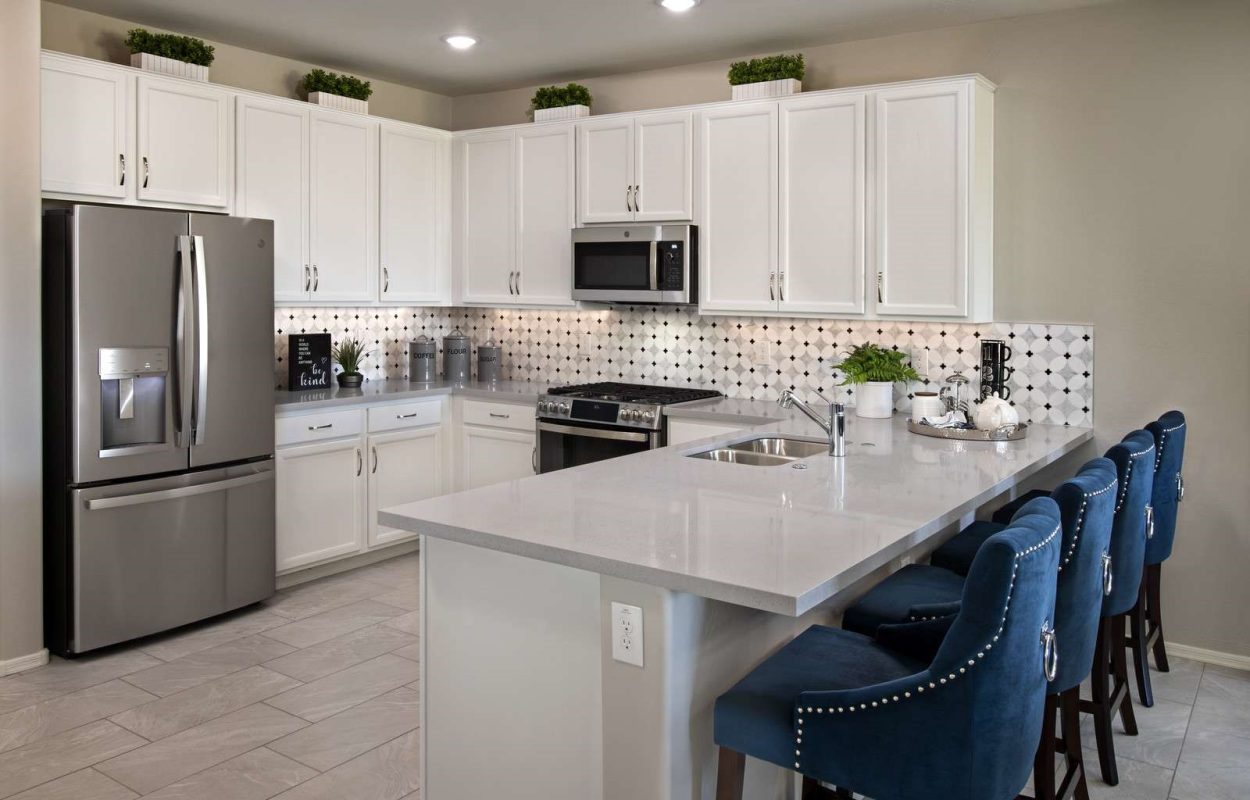
From a civil design perspective, kitchens are categorized into five layout types: linear, L-shaped, U-shaped, island, and corridor.
-
The sink should be placed as far as possible from the stove to prevent dirt or grease from contaminating clean dishes.
-
The stove should not be placed near or under windows, which could extinguish flames or cause fire hazards if curtains are present.
-
Stoves should not be installed too close to refrigerators, as heat can negatively affect refrigerator performance. A minimum clearance of 40 cm on both sides of the stove must be maintained.
-
The kitchen work triangle must be followed, consisting of the sink, stove, and refrigerator, ideally forming an equilateral triangle with a total walking distance of 10 to 25 steps.
-
Linear kitchens cannot always accommodate the work triangle properly; short walls bring appliances too close, while long walls spread them too far apart, increasing fatigue during movement.
-
In one-sided linear kitchens, a minimum of 90 cm of free space should be maintained in front of cabinets and appliances for safe movement.
-
For corridor kitchens, the minimum aisle width must be 107 cm.
-
Minimum entrance door width: 88 cm; for open kitchens: 102 cm.
-
Minimum floor area under shelving: 5.5 m², and minimum width between main walls: 1.8 meters.
Gas
-
Gas piping must provide a volume of 40 m³ with standard sealing, assuming 3 meters in height and 14 m² area. Otherwise, combustion air must be supplied through a permanent vent to the outside with a minimum opening of 645 cm².
-
Non-compliance with any of these engineering regulations may result in refusal of final building approval.

