


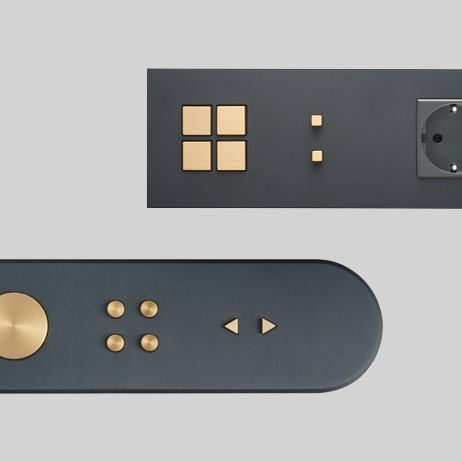
Everything You Need to Know About Bedside Switch and Socket Panels: Comfort, Safety, and Style in One
Introduction
In today’s world, where technology is evolving at an unprecedented pace, the concept of a “smart home” is no longer a distant dream. People are actively seeking solutions that make everyday life more convenient, secure, and intelligent. One such solution—often overlooked but highly impactful—is the bedside switch and socket panel.
These panels go far beyond their basic role of turning electrical devices on and off. Acting as a bridge between humans and smart technology, they allow precise and flexible control over various electronic systems in the home—while also playing a significant role in interior design. In this comprehensive guide, we’ll explore the full potential of these innovative panels.
Why Bedside Switch and Socket Panels Matter
● Enhancing Daily Life Comfort
Traditionally, light switches and power sockets were installed near the entrance of a room, requiring users to get up from their bed or seating area to turn devices on or off. Bedside switch panels have changed that experience entirely.
Now, users can control lighting, room temperature, motorized curtains, power outlets, and even security systems—without leaving their bed.
● Applications Beyond Residential Use
These panels are not limited to personal bedrooms. They are increasingly being used in hotels, smart villas, VIP suites, conference rooms, and even healthcare facilities.
In hotels especially, hybrid panels (mechanical + touch + smart) enable guests to manage their environment independently and comfortably, without needing assistance from staff or multiple remotes.
● Security and Energy Efficiency
Advanced panels often include features like auto shut-off for electrical devices during specific hours or when the room is unoccupied. This not only reduces energy waste but also mitigates the risk of electrical hazards like fires caused by unattended appliances.
Types of Bedside Switch and Socket Panels
Depending on the user’s needs and the level of technology required, bedside panels come in various forms:
1. Traditional Mechanical Panels
These are the most basic and cost-effective options. Typically featuring one or more toggle or rocker switches, these panels are ideal for users who prioritize simplicity and affordability.
Key Features:
-
Reliable, no software required
-
Budget-friendly
-
Easy installation and maintenance
-
Limited to local (manual) control only
2. Touch and Electronic Panels
A step up in design and technology, these panels utilize capacitive touch sensors and often feature sleek, backlit glass surfaces for a modern aesthetic.
Advantages:
-
Stylish and contemporary appearance
-
Quick response to touch
-
Built-in dimmers for light intensity adjustment
-
LED indicators for device status (on/off)
3. Smart Panels (IoT-Enabled)
Smart panels are the most advanced option, capable of integrating with Internet of Things (IoT) ecosystems. Users can control all connected devices via smartphones, tablets, or voice assistants like Amazon Alexa and Google Assistant.
Key Features:
-
Remote access via mobile apps
-
Task scheduling and automation
-
Real-time energy usage reporting
-
Voice control compatibility
4. Hybrid Panels
In premium environments or projects requiring flexibility, hybrid panels combine mechanical, touch, and smart technologies in a single unit.
These are ideal for users who want manual controls for some functions and remote or voice control for others, all within one sleek interface.
Internal Mechanisms of Bedside Panels
To better understand how these panels operate, let’s take a look at their core internal technologies:
On/Off Switching
This is the simplest mechanism. A physical or digital switch toggles the electrical current to a connected device. Found in mechanical and hybrid panels, this mechanism is essential for basic lighting and appliance control.
Capacitive Touch Sensors
Used in electronic and touch panels, these sensors detect the electrical charge of a human finger. When touched, they send commands to the control circuitry.
Advantages:
-
High responsiveness and accuracy
-
No moving parts (increased durability)
-
Sleek, modern interface
Wireless Connectivity (Wi-Fi / ZigBee / Bluetooth)
Smart panels communicate with control hubs or mobile apps using wireless technologies:
-
Wi-Fi: Wide coverage, ideal for medium to large homes
-
ZigBee: Low energy consumption, stable network performance
-
Bluetooth: Best for short-range, local control
Motion and Presence Sensors
Some high-end models include sensors that detect movement or body presence. These are especially useful for automatically turning on lights when a person enters the room or approaches the bed at night.
USB Ports and Fast Charging Outlets
Modern panels often feature USB-A and USB-C ports, allowing direct charging of smartphones, tablets, and other gadgets—eliminating the need for additional adapters and reducing clutter around the bedside.
Benefits of Using Bedside Switch and Socket Panels
Unmatched Convenience
Having all essential room functions at your fingertips—without getting out of bed—is a game changer, especially during nighttime or for people with limited mobility.
Enhanced Safety & Energy Management
These panels help prevent unnecessary power consumption by enabling scheduled shut-off times or remote deactivation. This not only cuts down electricity bills but also ensures greater home safety while you’re away.
Design Harmony with Interiors
Thanks to their minimalist aesthetics and use of high-quality materials (glass, aluminum, or premium plastic), these panels blend effortlessly into modern interior designs, adding a sophisticated touch.
Ideal for Public and Commercial Spaces
Hotels, hospitals, executive suites, and luxury apartments can greatly improve guest satisfaction and operational efficiency by implementing these advanced panels.
Bedside switch and socket panels have evolved from simple electric devices into essential components of modern smart homes. By combining usability, elegance, safety, and intelligence, they offer a seamless interface for controlling a variety of home functions.
With a wide range of types, features, and connectivity options available, choosing the right panel depends on your specific needs, interior design preferences, and budget.
Whether you’re looking for a basic lighting control system or a fully integrated smart setup with voice control and remote access—there is a perfect solution out there for every space.

