


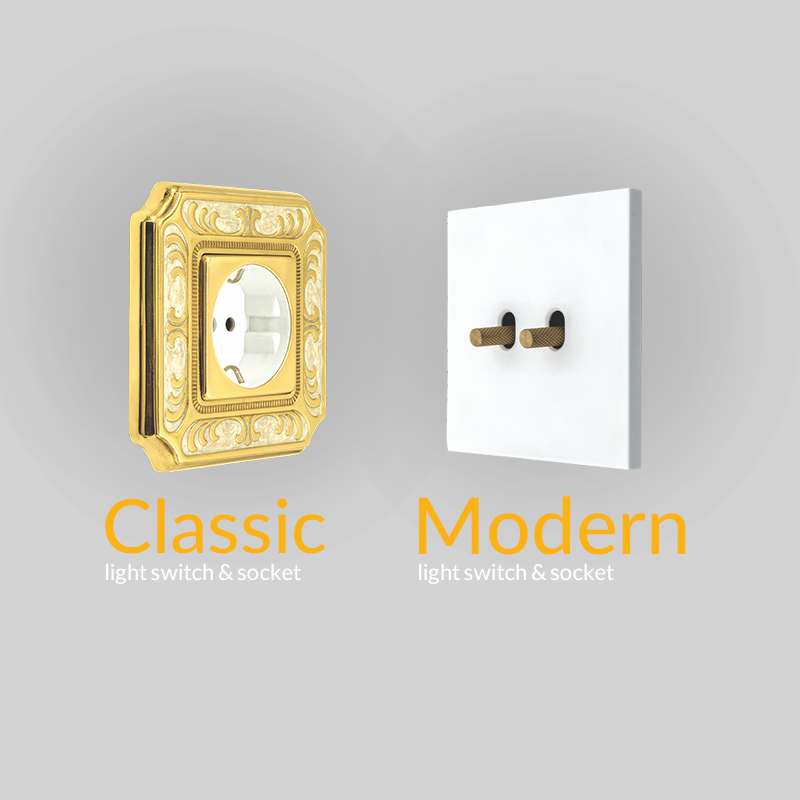
In the world of interior design, sometimes small details can have the greatest impact on the beauty of a space. Switches and sockets are one of those seemingly simple yet highly decisive elements. Today, interior designers typically follow two main trends when choosing switches and sockets: classic and modern styles. Each of these styles brings a completely different philosophy, feeling, and visual appeal to a space. Below, we examine their differences in detail so you can make a more informed choice.
1. Aesthetic Design: From Classic Elegance to Modern Simplicity
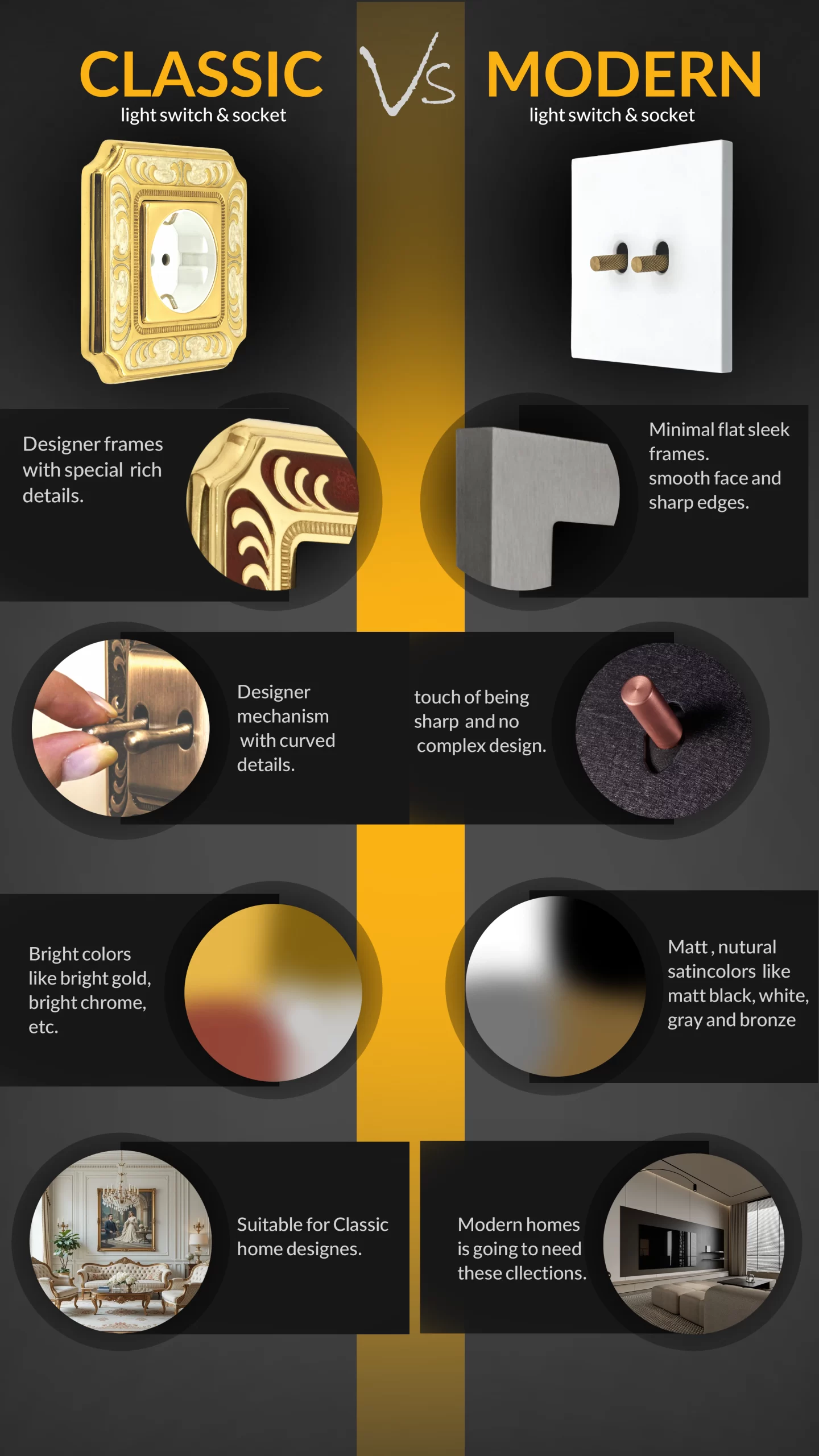
Classic switches and sockets are designed with frames that feature embossed details, curved lines, and decorative patterns. These models are often inspired by European Baroque and Neoclassical architecture and art. Special attention is paid to depth, relief, and finesse to convey a sense of grandeur and authenticity at first glance.
In contrast, modern switches and sockets are based on simplicity and minimalism. Their main characteristics include flat surfaces, straight lines, sharp edges, and a completely clean and uniform appearance. This style avoids excessive decorations or curves, prioritizing order, harmony, and simplicity.
2. Mechanism and Tactile Feel: A Different User Experience
Classic models often use lever or rotary mechanisms, providing a more traditional and tactile experience. Touching these switches recalls the authenticity and mechanical details seen in old European designs.
Modern models, however, prioritize simplicity and direct functionality. Their minimalist design allows users to achieve maximum efficiency with minimal effort. Some even feature touch or sensor mechanisms for smart lighting control.
3. Materials and Body Construction: The Blend of Art and Technology
In classic style, luxurious and heavy materials such as brass, bronze, or polished chrome are common. These materials not only offer high durability but also create a radiant, sophisticated look. Embossed and patterned frames often have special finishes, giving them a handcrafted appearance.
Modern models focus on functionality, durability, and compatibility with the space. As a result, materials like brushed aluminum, matte steel, toughened glass, and high-quality molded plastics are used. Their surfaces are usually smooth and unembossed to complement minimalist interiors.
4. Color and Finish: From Golden Shine to Neutral Calm
One of the most noticeable differences between these styles is in the color and final finish.
Classic models often use bright gold, chrome, silver, and brass tones. These colors make switches and sockets focal points in a room, conveying a sense of luxury and grandeur.
Modern switches and sockets, on the other hand, prefer matte and natural colors such as matte black, white, gray, and bronze. These create a calm, organized, and contemporary environment. In this style, the goal is not to draw attention but to serve as a harmonious element within the space.
5. Harmony with Interior Design
Your choice of switches and sockets should align perfectly with the interior style of your home or office.
-
Classic switches and sockets are ideal for homes with traditional furniture, decorative wall moldings, crystal chandeliers, and classic architectural details. Warm colors and shiny materials help maintain overall harmony in such spaces.
-
Modern switches and sockets are suitable for homes with minimalist designs, simple ceilings, hidden lighting, and geometric furniture. In these spaces, simplicity and order are paramount, and every element must align with the overall design concept.
6. The Role of Light and Reflection
In classic switches and sockets, the shiny surface and embossed details reflect more light, making the space appear brighter. Therefore, they are often used in living rooms or formal areas.
Modern switches and sockets, with their matte and smooth surfaces, diffuse light evenly and prevent harsh reflections. This makes them particularly suitable for minimalist spaces, kitchens, and offices.
7. Durability, Cleaning, and Maintenance
Classic switches and sockets may appear more durable due to heavier materials, but their shiny surfaces require frequent cleaning to avoid fingerprints and smudges. Modern models with matte, smooth finishes are easier to clean, making them more practical for high-use areas.
8. Conclusion: Choosing Between Two Different Worlds
Ultimately, choosing between classic and modern switches and sockets is a choice between emotion and logic. If you love intricate details, grandeur, and elegance, classic models can transform your home into a work of art. If you value order, simplicity, technology, and harmony, modern designs are a smart choice.
Both styles can be beautiful in the right context. The key is to select a design that aligns with your space’s character and your lifestyle.
When purchasing switches and sockets, don’t just focus on appearance. Consider the interior design, lighting type, colors of other materials (like halogen frames or chandeliers), and even natural light. Brands like ZEMGROUP offer a collection of both classic and modern models, allowing every lifestyle to find a harmonious and unique choice.
FAQs
1. What is the main difference between classic and modern switches and sockets?
The primary difference lies in aesthetic design, material, and spatial feel. Classic models are recognized for decorative details, shiny colors, and embossed frames, while modern models are simple, flat, and minimalist. Classic emphasizes elegance and ornamentation, while modern prioritizes simplicity and functionality.
2. Are classic switches and sockets only suitable for traditional homes?
No. Although they are usually used in classic, royal, or vintage-style homes, they can be combined with modern or neoclassical interiors. For example, pairing a gold classic switch with plain white walls can create an artistic and striking contrast.
3. What colors are most commonly used in modern switches and sockets?
Matte and natural colors are more popular in modern designs, such as matte black, white, gray, silver, and bronze. These colors enhance harmony with minimalist spaces and provide a sense of calm and order.
4. Which type is better for small spaces?
Modern switches and sockets are ideal for small or minimalist spaces. Their simple design and flat surfaces prevent visual clutter, making the area appear larger and more organized. Classic models, with ornate details and shiny finishes, work better in larger spaces.
5. Which style is easier to maintain and clean?
While both styles are durable when purchased from reputable brands, modern models are easier to clean. Matte and smooth surfaces show fewer fingerprints and smudges, while shiny classic models require regular polishing to maintain their luster.
6. Are modern switches and sockets only simple in appearance or also technologically advanced?
Modern switches often feature advanced technology, such as touch mechanisms, motion sensors, or integration with smart home systems. Classic models, in contrast, focus primarily on visual elegance and a luxurious feel.
7. What if my interior style is mixed?
If your space combines modern and classic elements, you can opt for neoclassical or modern-luxury models. These usually have a simple design with luxurious colors and materials (like matte gold or bronze), bridging the two styles.
8. Are classic switches and sockets more expensive than modern ones?
Generally, yes. Classic models often use special materials like brass, gold plating, and involve more complex manufacturing processes, making them pricier. However, modern models with smart features or sensors can fall within similar price ranges.
9. Which brand offers a variety of options in both styles?
ZEMGROUP is a leading brand offering luxury and modern switches and sockets. They provide classic models with brass frames and authentic designs as well as modern models with simple frames and matte colors. You can easily find a model that matches your interior style in their collection.
10. How to choose the right switch or socket for my home style?
Consider these three points:
-
Overall decor style: Classic models suit detailed and ornate spaces; modern models suit simple, minimalist designs.
-
Colors of other materials: Match switches and sockets with halogen frames, chandeliers, or handles.
-
Lighting conditions: Shiny surfaces stand out in darker areas, while matte colors suit well-lit spaces.

