


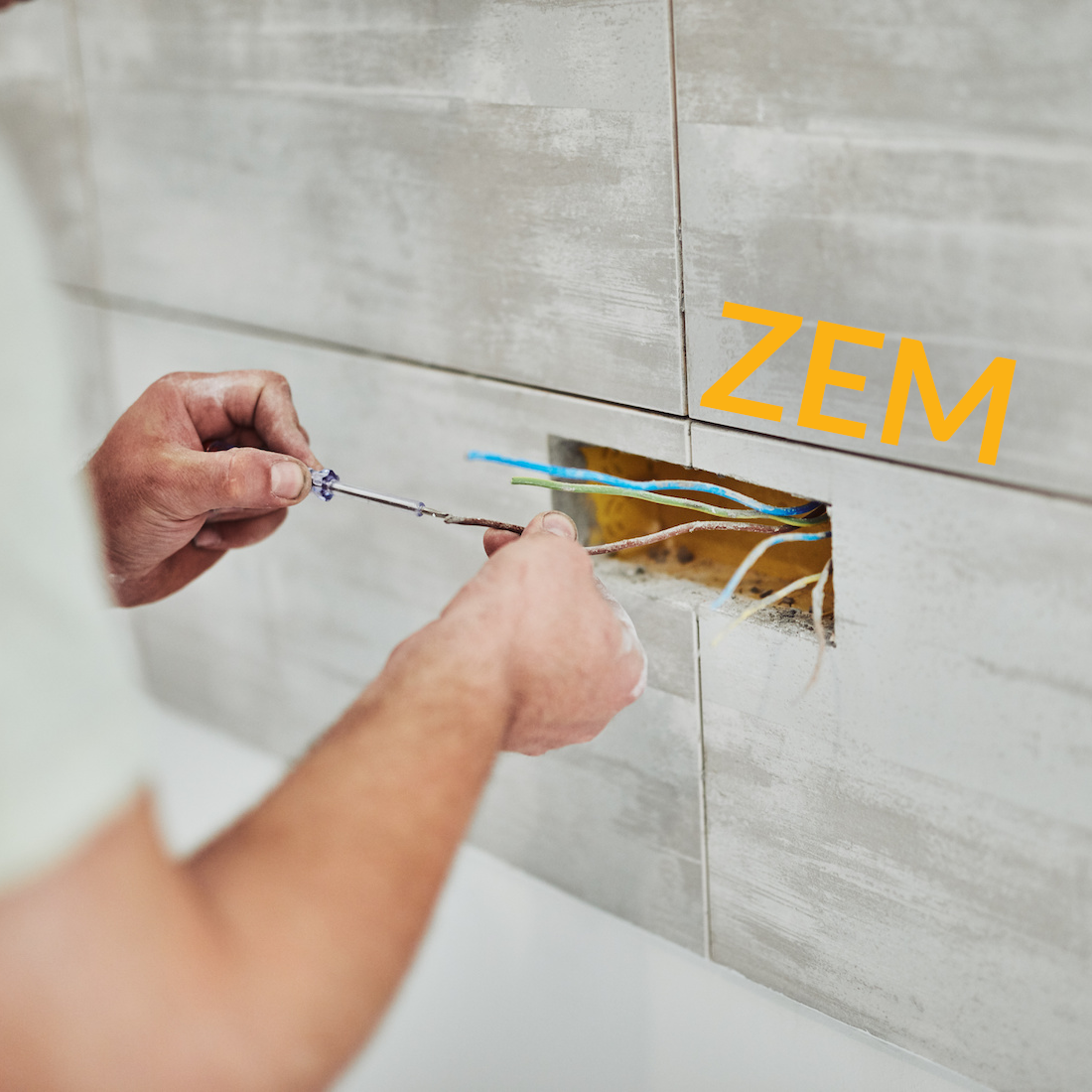
Building wiring is one of the most critical stages in the installation of a residential project. Even the smallest mistake at this stage can lead to significant costs, rework, and even serious hazards such as fire. Contrary to popular belief, wiring is not just about installing some wires and conduits; it encompasses a set of standardized consumable materials, each of which plays a crucial role in the safety and final quality of the project.
In a proper wiring project, the amount of material used depends entirely on the layout, floor area, type of usage, location of switches and outlets, and even the interior architectural style. Therefore, knowing which materials are used in building wiring and their average consumption helps to:
-
Estimate project costs more accurately
-
Prevent over-purchasing or shortages of materials
-
Execute the project according to engineering standards
-
Improve the quality of wiring and reduce future maintenance needs
-
Better manage the budget during renovation or new construction
In many buildings, electricians estimate material usage “blindly” based on experience, while for an 80-square-meter house, the exact quantity of wire, conduit, boxes, and junctions can be calculated. Knowing this information is also very important for homeowners, as electrical work is usually priced as a lump sum without details. By knowing the actual material consumption, you can monitor quality and prevent extra costs.
In this article, we first introduce all the consumable materials used in building wiring, then examine the standard consumption per square meter, and finally calculate material consumption for 60, 80, 100, and 150-square-meter houses. This is the most precise and comprehensive guide for homeowners, supervising engineers, electricians, and interior designers to make professional and standard material estimates for their projects.
2. Complete Classification of Electrical Materials in Buildings
Various materials are used in building wiring, each with a specific role and application. Proper classification not only helps with accurate cost estimation but also makes the execution safer and more standard. The categories are explained in detail below:
2.1. Wires and Cables
a) Flexible Wire (Stranded)
-
Flexible wires are highly versatile, ideal for complex paths (e.g., inside small ducts, bends, or corrugated conduits).
-
Common sizes for residential wiring: 1×1.5 mm² (lighting), 1×2.5 mm² (outlets), 1×4 or 1×6 mm² (for higher-power circuits such as air conditioning systems).
-
Advantages: good conductivity, easy installation, better adaptability to narrow channels.
b) Solid Wire
-
Solid wires have a fixed diameter and are used for short, simple routes or areas with few bends.
-
They are an economical choice for low-load circuits that do not require high flexibility.
c) Power Cables
-
Usually multi-core (e.g., 3×2.5 mm², 3×4 mm²), used for circuits with multiple phases or high current (e.g., air conditioners, pumps, ventilation systems).
-
Power cables must be selected according to insulation quality and conductor capacity to prevent excessive heating in long runs.
d) Telephone, Network, and Antenna Cables
-
Telephone cable: usually 2×2 or more, for telephony inside the building.
-
Network cable: Cat5e, Cat6, or Cat6a for internal network systems (internet, computers, IP cameras).
-
Antenna cable: usually RG6 or RG59, used for television signal distribution.
2.2. Electrical Conduits and Ducts
Conduits and ducts protect wires and cables from mechanical damage, heat, or construction conditions.
a) Heat-Resistant Corrugated Conduit
-
Very flexible, used in areas with complex wiring paths.
-
Common diameters: 13, 16, 20, 25 mm depending on the number of wires inside.
-
“Heat-resistant” indicates higher thermal tolerance, suitable for areas near panels or junction boxes.
b) PVC Electrical Conduit
-
Made of PVC (polyvinyl chloride), lightweight, inexpensive, and corrosion- and moisture-resistant.
-
Suitable for fixed, organized routes like inside walls or ceilings.
-
Available in diameters of 16, 20, 25 mm.
c) Rigid Polyethylene (PE) Conduit
-
Mechanically strong, used in areas exposed to physical pressure (e.g., floors).
-
Lightweight and easy to install.
d) Ducts and Trunking
-
Wall duct: used for surface wiring inside walls without embedding.
-
Trunking: plastic or metal channels suitable for networks, lighting, and outlets, often used in offices or projects requiring accessible wiring.
-
Pipe clamps and supports: secure conduits along ceilings, walls, or floors.
2.3. Boxes and Enclosures
For installing switches, outlets, and wire connections:
-
Flush-mounted gypsum boxes: embedded in walls and covered with switches or outlets.
-
Drywall (Knauf) boxes: designed to fit gypsum board walls.
-
Surface-mounted boxes: installed on wall surfaces when in-wall wiring is impractical.
2.4. Junction Boxes and Connectors
These materials manage wire connections and circuit distribution:
-
Junction box: a place where wires connect or branch; can be metal or plastic.
-
Terminal blocks: organize wires inside junction boxes for clean, safe connections.
-
Electrical tape: insulates connections.
-
Heat shrink tubing: provides secure insulation when heated over wires.
-
Zip ties: organize wire bundles inside junction boxes, ducts, or conduits.
2.5. Electrical Panel Materials
The distribution board is the central part of electricity distribution:
-
MCB (Miniature Circuit Breaker): a separate breaker for each circuit (lighting, outlets, AC).
-
RCD/RCCB (Residual Current Device): protects people from electric shocks by cutting off circuits during ground leakage.
-
RCBO: combines MCB and RCD in one unit, protecting against both overload and leakage.
-
DIN rail: metal strip to mount modular components.
-
Busbar: conductor distributing electricity between breakers and panel inputs.
-
Cable lugs: connectors linking cables to rails, busbars, or panel terminals.
-
Numbering tape: labels circuits for organization and readability.
2.6. Communication and Network Equipment
Modern buildings are not wired only for electricity:
-
LAN Jack: for network cable (Cat6) connections to computers or devices.
-
Patch panel: organizes network cables in large or luxury buildings.
-
Telephone terminal: connects telephone wiring.
-
Antenna splitter/network switch: for multi-unit buildings, additional communication equipment may be used.
2.7. Security and Smart Systems
Modern projects often incorporate smart or security wiring:
-
Camera cable: coaxial or network (PoE) for CCTV.
-
12V adapter: powers cameras or low-voltage sensors.
-
Smart relay modules: manage lights, curtains, HVAC intelligently.
-
Motion/light sensors: control smart lighting.
-
Video intercom cable: connects units to entrance for video communication.
2.8. Consumable Tools and Hardware
Some consumables are needed for wiring, depending on project size:
-
Electrical tape
-
Teflon tape
-
Heat shrink tubing
-
Zip ties
-
Screws and plugs for panel or box installation
-
Pipe clamps/supports
-
Aquarium glue (for sensitive insulation points)
2.9. Switches and Outlets
Although not wire-passing consumables, switches and outlets are an integral part of residential electrical materials:
-
Single-pole, double-pole, and intermediate switches
-
Dimmer switches
-
Grounded outlets (three-pin)
-
Telephone outlets
-
Network outlets
-
Antenna outlets
-
Switch/outlet frames (plastic, glass, modern, luxury)
This section identifies all common residential electrical materials and links each to the type of system (lighting, outlets, panels, smart systems). This forms the basis for the next section: Material Consumption per Square Meter.
3. Standard Material Consumption per Square Meter
For the first time, based on engineering standards and professional experience, the average consumption of wires, conduits, boxes, junctions, cables, and other materials is provided per square meter. This section is essential for accurate project cost estimation.
3.1. Wire Consumption per Square Meter
Consumption depends on the number of rooms, distance from panel to outlets, number of outlets, and type of lighting. Average residential consumption:
-
Flexible wire 1.5×1 (lighting): 0.9–1.2 m/m²
-
Flexible wire 2.5×1 (outlets): 1.2–1.4 m/m²
-
Wire 4 or 6 (chandeliers, AC, stove, boiler): 0.2–0.3 m/m²
Total wire consumption per m²: 2.3–2.9 m
-
Example: 80 m² house → ~185–230 m of wire
3.2. Conduit Consumption
-
Standard: 0.6–0.9 m/m²
-
Example: 100 m² house → 60–90 m of conduit
3.3. Switch and Outlet Boxes per m²
-
General standard: 0.18–0.25 boxes/m²
-
Example: 60 m² → 12–15 boxes; 80 m² → 15–20 boxes; 100 m² → 20–25 boxes; 120 m² → 25–30 boxes
3.4. Junction Box Consumption
-
One junction box per 20–25 m²
-
Examples: 60 m² → 3 boxes; 80 m² → 3–4 boxes; 100 m² → 4 boxes; 150 m² → 6 boxes
3.5. Weak Current Cables (Network, Telephone, Antenna)
-
Antenna (RG6): 0.18–0.25 m/m²
-
Network (Cat6): 0.2–0.3 m/m²
-
Telephone: 0.1–0.15 m/m²
3.6. Electrical Panel Materials
-
One MCB per 40 m²
-
Example: 80 m² → 2 MCB + 1 RCD; 100 m² → 3 MCB + 1 RCD; 150 m² → 4–5 MCB + 1 RCD + AC breaker
3.7. Consumables and Small Items
| Material | Standard Usage |
|---|---|
| Electrical tape | 3–5 per 100 m² |
| Zip tie | 30–50 per 100 m² |
| Heat shrink | 2 m per 100 m² |
| Screws/anchors | 30–50 per project |
| Pipe clamps | 8–12 per 10 m conduit |
3.8. Summary of Material Consumption per m²
| Material | Consumption per m² |
|---|---|
| Wire | 2.3–2.9 m |
| Conduit | 0.6–0.9 m |
| Network cable | 0.2–0.3 m |
| Antenna cable | 0.18–0.25 m |
| Telephone | 0.1–0.15 m |
| Switch/outlet boxes | 0.18–0.25 pcs |
| Junction box | 1 per 20–25 m² |
| MCB | 1 per 40 m² |
3.9. Calculated Consumption for Various House Sizes
60 m² House
-
1.5 mm² wire: 54–72 m (buy ~60–80 m)
-
2.5 mm² wire: 72–84 m (buy ~80–95 m)
-
4/6 mm² wire: 12–18 m (buy ~15–20 m)
-
Total wire: 138–174 m
-
Conduit: 36–54 m (buy 40–60 m)
-
Boxes: 10.8–15 pcs (buy 12–16 pcs)
-
Junction boxes: 3 pcs
-
Antenna cable: 10.8–15 m
-
Network cable: 12–18 m
-
Telephone cable: 6–9 m
-
MCB: 3 pcs + 1 RCD
80 m² House
-
1.5 mm² wire: 72–96 m (buy 80–105 m)
-
2.5 mm² wire: 96–112 m (buy 105–125 m)
-
4/6 mm² wire: 16–24 m (buy 20–26 m)
-
Total wire: 184–232 m
-
Conduit: 48–72 m (buy 55–80 m)
-
Boxes: 14.4–20 pcs (buy 15–21 pcs)
-
Junction boxes: 3–4 pcs (buy 4 pcs)
-
Antenna cable: 14.4–20 m
-
Network cable: 16–24 m
-
Telephone cable: 8–12 m
-
MCB: 2–3 pcs + 1 RCD
100 m² House
-
1.5 mm² wire: 90–120 m (buy 100–130 m)
-
2.5 mm² wire: 120–140 m (buy 130–155 m)
-
4/6 mm² wire: 20–30 m (buy 22–35 m)
-
Total wire: 230–290 m
-
Conduit: 60–90 m (buy 70–100 m)
-
Boxes: 18–25 pcs (buy 20–27 pcs)
-
Junction boxes: 4–5 pcs
-
Antenna cable: 18–25 m
-
Network cable: 20–30 m
-
Telephone cable: 10–15 m
-
MCB: 3–4 pcs + 1 RCD
150 m² House
-
1.5 mm² wire: 135–180 m (buy 150–200 m)
-
2.5 mm² wire: 180–210 m (buy 195–240 m)
-
4/6 mm² wire: 30–45 m (buy 35–50 m)
-
Total wire: 345–435 m
-
Conduit: 90–135 m (buy 100–150 m)
-
Boxes: 27–37.5 pcs (buy 28–38 pcs)
-
Junction boxes: 6–8 pcs
-
Antenna cable: 27–37.5 m
-
Network cable: 30–45 m
-
Telephone cable: 15–22.5 m
-
MCB: 4–5 pcs + 1 RCD
Purchase Recommendations
-
Always add 10–15% extra for waste and complex designs; sometimes up to 20% for large or intricate projects.
-
Use certified wires and reputable brands.
-
Separate circuits for lighting, outlets, AC/stove, and kitchen/boiler are recommended.
Differences Between Traditional and Smart Wiring
Smart wiring changes material type and quantity due to its structure for controlling lights, sensors, network, and internal communications.
-
Wiring Type: Less power wiring, more data wiring.
-
Conduit Layout: More conduits, often 20–40% longer than traditional.
-
Boxes and Junctions: Fewer switch boxes, centralized junction boxes, one large central box.
-
Additional Equipment: Smart relays, mini server, sensors, smart switches, curtain modules, HVAC and RGB modules.
-
Panels and MCBs: Larger panels with more space for smart modules.
Summary Table (Traditional vs Smart Wiring)
| Component | Traditional | Smart |
|---|---|---|
| 1.5 & 2.5 mm² wire | High | 10–30% less |
| 4 & 6 mm² wire | Same | Same |
| Network cable | Low/None | 20–80% more |
| BUS cable | None | Added |
| Conduit | Medium | 20–40% more |
| Switch boxes | High | 30–50% less |
| Junction boxes | High | Less |
| Panels | Small | Large |
| Extra equipment | None | High (relays/sensors/panels) |
-
Smart wiring uses less power wiring but overall material and cost are higher due to additional control equipment.
FAQ
-
Which materials are most consumed in house wiring?
Wires (1.5 & 2.5 mm²), conduits, switch/outlet boxes, network and antenna cables, and junction boxes are most consumed. Secondary materials include tape, zip ties, heat shrink, terminals, and MCBs. -
Is wire consumption fixed per house area?
No, it depends on floor plan, number of rooms, outlets, lighting, hidden lights, ceiling spots, wall lights, and wiring type (traditional or smart). Average: 100 m² → 230–290 m of wire. -
Does smart wiring increase wire usage?
No, power wires decrease, but data and BUS cables increase, raising total material cost. -
Are fewer switch boxes used in smart wiring?
Yes, due to touch panels, presence sensors, central controllers, and apps, reducing box consumption by 30–50%. -
Why is conduit installation more in smart wiring?
To prevent noise and create standard paths for power and data, 20–40% more conduit is required. -
Are more junction boxes needed in smart wiring?
No, most circuits are routed to a central box. Traditional wiring uses more distributed junction boxes. -
Wire consumption in 60, 80, 100, 150 m² houses:
-
60 m²: 138–174 m
-
80 m²: 184–232 m
-
100 m²: 230–290 m
-
150 m²: 345–435 m
-
Do smart panels require larger enclosures?
Yes, to accommodate relays, terminals, module power supplies, central controllers, and separate fuses, often 2–3 times larger. -
Is Cat6 necessary in ordinary homes?
In traditional wiring, only for internet. In smart homes, it’s essential for devices, cameras, touch panels, central hubs, and sensors, 2–5 times more than traditional. -
**Is smart wiring more

